Book Review: The Handmaid’s Tale by Margaret Atwood

The Handmaid’s Tale
Margaret Atwood

I first read The Handmaid’s Tale sometime in college in the late 1980s. After about 20 years of recommending it, I have been thinking maybe I should read it again to make sure I would still think it recommendation-worthy. Although given my pro-Atwood bias it seemed unlikely I would change my tune. My husband (at my urging) brought The Handmaid’s Tale along with him on our trip to Thailand and Cambodia. I casually picked it up just to remind myself what he was going to be reading and suddenly found myself drawn in. And not surprisingly I enjoyed reading it again, remembering things I had forgotten and noticing new details. Some of the themes may be slightly dated, but the story is still very compelling.

The brilliant thing about Margaret Atwood’s speculative fiction is that she is such a master of language that she can create a new world without the descriptions seeming forced. The details of her dystopias just unfold as part of the narrative. There are none of those klutzy moments like those found in the works of lesser writers. Those writers who, like an old fashioned opera singer who has no sense of drama and who can’t sing and act at the same time, walks to the middle of the stage plants his/her feet, faces forward and sings the whole damn aria like they were giving a recital. Although, having said that, I must admit that Atwood does get a little cutesy when she applies proper nouns to some of her made up people, places, and things like she did in Oryx and Crake and The Year of the Flood.

My biggest problem with The Handmaid’s Tale is the same issue I had when I read it 20 years ago. The ending feels too frivolous to me. I think the story is quite devastating. It just seems wrong to end on a humorous note. No doubt Atwood is satirizing academia and academic conferences, but the emotional effect is a little jarring for me.

But none of the quibbles really matter. The book, like Atwood herself, is brilliant. And I am now contemplating a re-read of all of her fiction. And to those Canadians who may think Atwood overexposed, over-praised and self-important (I’ve read your blogs…), for many of us fans who aren’t exposed to Atwood as a National Treasure, the woman is a goddess.
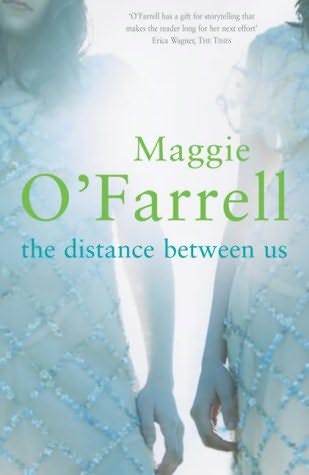
Book Review: The Distance Between Us by Maggie O’Farrell

The Distance Between Us
Maggie O’Farrell

A friend of mine at book club absolutely loved O’Farrell’s book The Vanishing Act of Esme Lennox which I half-heartedly tried to read at one point. Since I trust her recommendations 99% of the time I felt bad about putting it down. So when I saw this O’Farrell book on the library shelves at the resort in Phuket I thought I would give it a go and make Wendy proud.

The Distance Between Us is about two sisters Stella and Nina who were born to Italian parents in Scotland and Jake who was born to a British women in Hong Kong. Oddly enough, like Her Fearful Symmetry (reviewed below), the sisters have been extremely close their whole lives (although not twins) and have some issues related to dependence and independence. Jake on the other hand is alone. His mother lives in New Zealand, he has no siblings, and his mother never even knew his father’s full name. He ends up in the UK for the first time in his life in his early 20s and finds himself a fish out of water. Eventually these two story lines intertwine in ways that are not wholly unexpected but surrounded by details that will surprise.

This book was immediately enjoyable and has many fascinating storylines. One of the more fascinating is the story of how Jake’s mother ended up in Hong Kong. In the 1960s she makes her way there overground in a VW bus by hitchhiking, trains, etc. via Europe, Turkey, Afghanistan, Pakistan, India…you get the picture. Hooking up (in more ways than one) with various people along the way. Not only does such a journey appeal to my own wanderlust, but it was a snapshot into a time when one could contemplate such a journey through parts of the world that seem highly problematic today.

Jake’s status as a British boy who has never been to Britain is also fascinating. I read this book in Chiang Mai and had been thinking about what it would mean to relocate to Asia permanently. My reaction, not surprisingly to me, is that I could never do it. Could never embrace fully all the differences and would always be pining for home. (And as much as I would love to live in Europe or the UK, I think I would ultimately feel the same way, always having a sense of not being “home”.) When Jake finally makes it to the UK he has all the feelings of dislocation and disorientation similar to what I was experiencing in Thailand. But to my Western-biased mind it seemed odd at first that this Brit would feel that way about his homeland. My extremely narrow-minded thought was “why would anyone prefer Hong Kong over the UK”. Of course Jake’s story helps me blow that personal ignorance (if not my own personal preference) to smithereens.

Stella and Nina also have interesting life stories (and Stella has a big secret) and I found all the characters interesting and likable. This was one of those books that is fun and is so compelling that I didn’t want to put it down. Thankfully I was sitting next to a pool in Phuket so I didn’t have to.

Now I need to give the Esme book another chance.

Book Review: Her Fearful Symmetry by Audrey Niffenegger

Her Fearful Symmetry
Audrey Niffenegger

I was actively avoiding this book. I had a long-held and completely uninformed bias against Niffenegger’s megahit, The Time Traveller’s Wife. In addition to being a contrarian, I am not a big fan of temporal displacement in novels and the addition of a love story really made me want to run for the hills every time it was mentioned. Despite trusted friends at book club raving about it, I just couldn’t bring myself to take a closer look. So when I started seeing the multitude of rave reviews in the blogosphere for Her Fearful Symmetry, I automatically took up a similar bias against it. And instead of time travel it had a ghost. No way, not for me.

And then while I was checking my email in the library at our resort in Phuket I saw it sitting on the shelf. My immediate reaction was “Oh, there’s that book.” And since I had never actually seen a copy in person I picked it up. And then promptly put it back. I did this a few times over the next few days. Then, on day five of our seven day stay I decide to give it a shot. And once I started reading I couldn’t put it down. I lounged around the pool deck of our villa doing nothing but reading Her Fearful Symmetry. Even when the ghost appeared I didn’t lose interest. I was happy to suspend my disbelief because I was enjoying it so much.

Everyone and their dog has reviewed this book so I am not going to bother with much with the plot. But I will give a short description: identical American twins inherit their aunt’s flat overlooking Highgate Cemetery in London, they move in, stuff ensues, etc. I will say it is an interesting and creative tale. The characters are also very interesting and generally very likable. I really liked Martin and his crazy OCD. I began to think I shouldn’t think of my own tendencies as OCD because they aren’t anywhere near the realm of debilitating like Martin’s are. But the more I read the more I realized that there are definite similarities with my behavior and OCD. Although based on Martin, mine is an extremely mild case.

I didn’t really like the ending. I feel like bad behavior was rewarded. But I won’t say anything more about that to keep this free of spoilers. And I had a few quibbles with some of the details. As an American who has cleared UK immigration about 20 times in my life I can tell you that if I had ever said to the immigration officer that I didn’t know when I would be leaving the UK like the twins did, they would have shuttled me off to a special room for additional scrutiny. UK immigration officers are far tougher than any others I have encountered. Heck in the Euro Zone they barely look at your passport, in the UK they always seem more than a little hostile, the look on their faces seeming to say “tell me again why we should let you in”. Also, is it really possible that the NHS would have been available to the twins just because they owned a flat in London? My experience as an American who once worked in London was that eligibility had to do with being employed. Am I wrong?

Still, despite these quibbles and the ending, I really enjoyed reading this book. It was perfect vacation reading. As much as I enjoyed it, however, I still don’t think I have gotten over my bias against The Time Traveller’s Wife. I don’t think I will be reading it anytime soon.

I just came across this picture John took of me havng fallen asleep while reading this book.

Asia Trip 9: An Oasis of Calm in Bangkok

[You may notice I moved from Roman to Arabic numerals to number this series. I realized that at some point my brain or yours was going to melt trying to figure out the Roman numbering.]

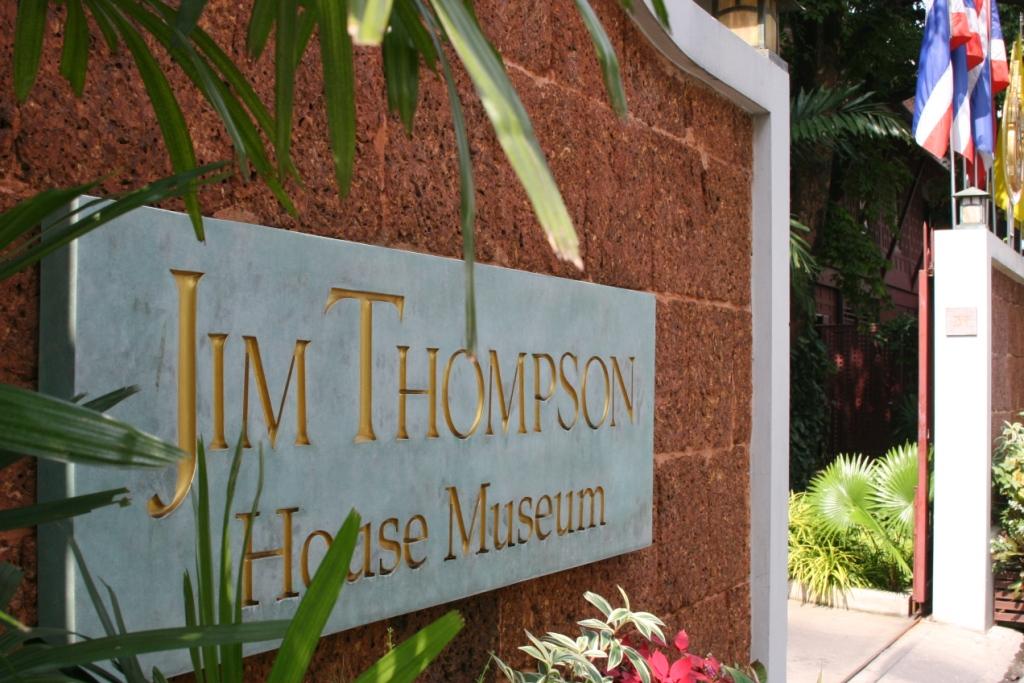
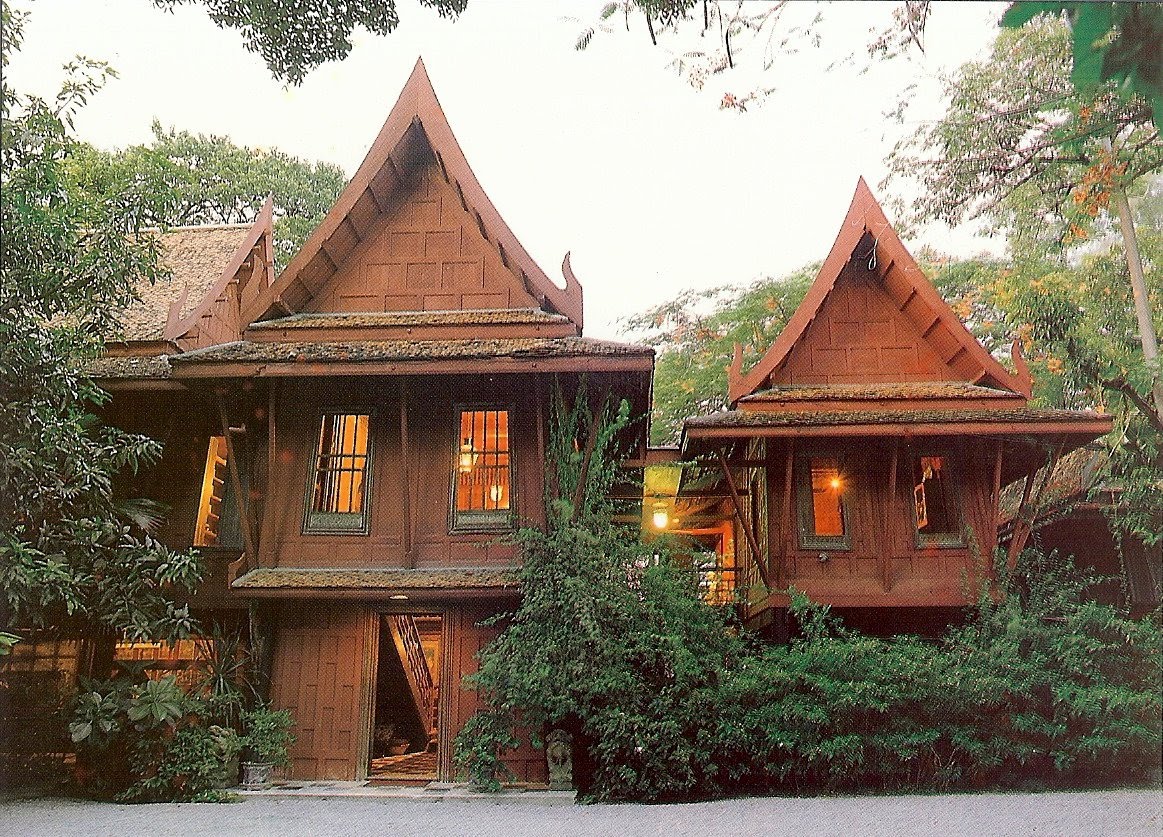
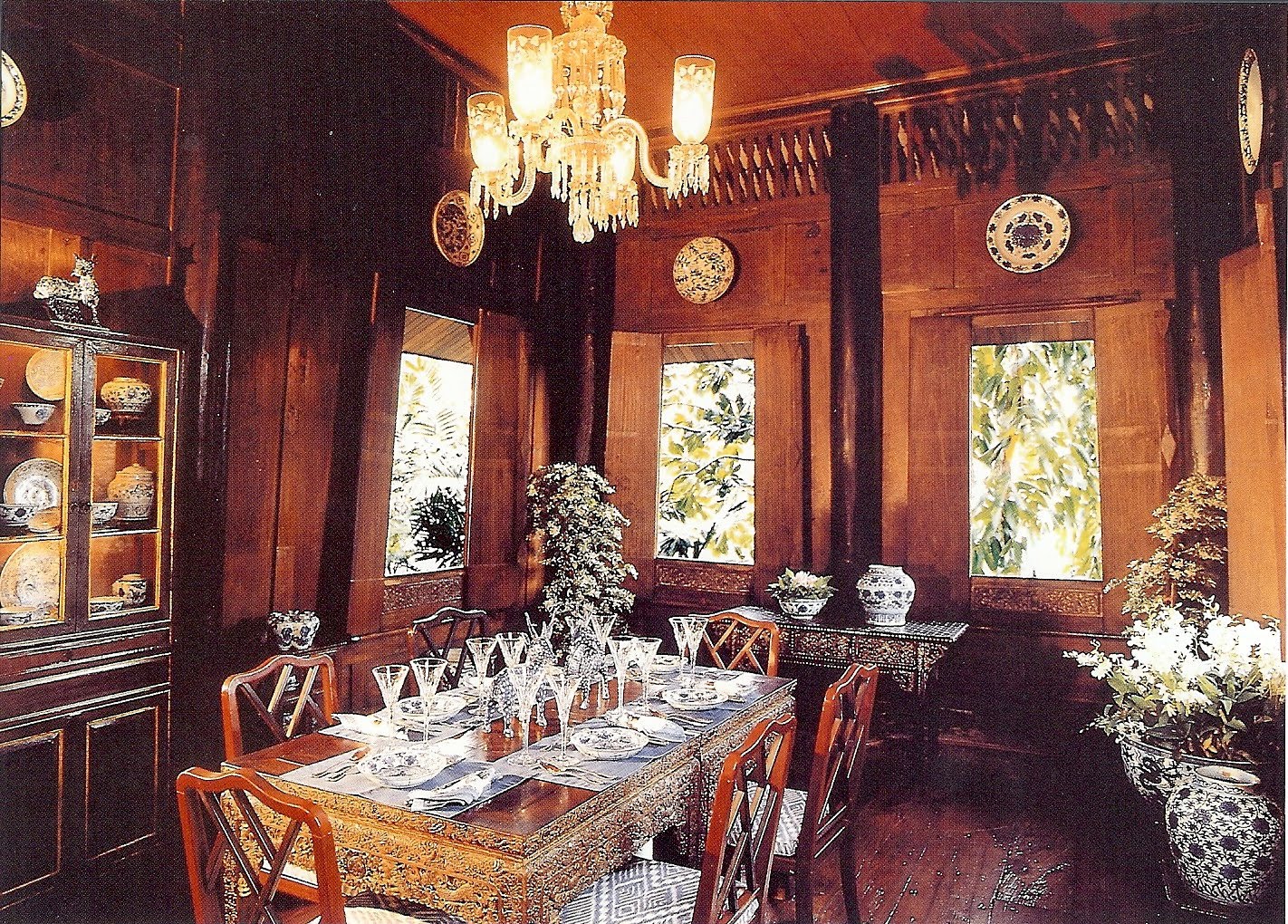
JANUARY 5, 2010: On our first full day in Bangkok we headed off to Jim Thompson’s house museum. Thompson was an American ex-pat and former spy who created a Thai silk company that introduced Thai silk into the mainstream of the American textile market. He also disappeared in 1967 and no one has a clue what happened to him. But his house and his company live on.

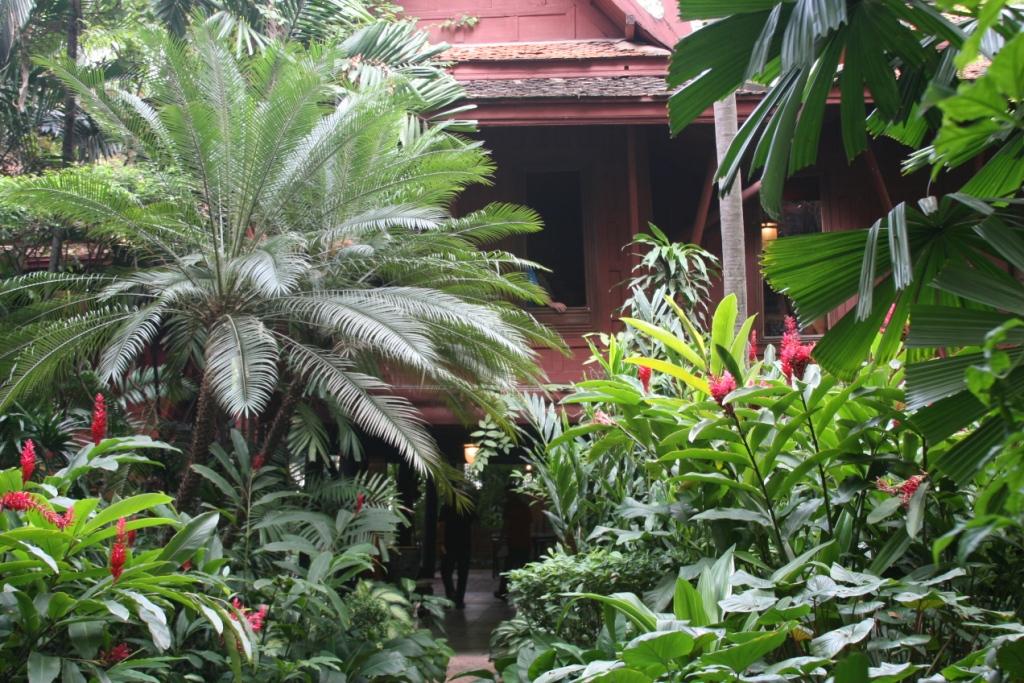
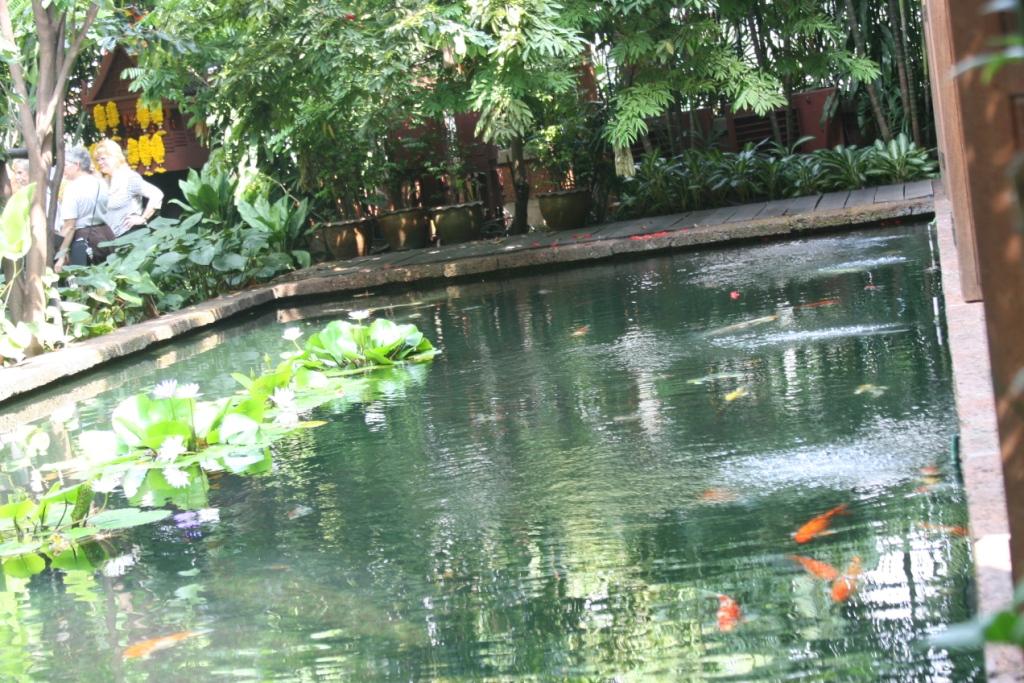
The house is an oasis of calm in a very busy part of Bangkok.