Whatever happened to these new books?

Back in October of 2015 Frances of Nonsuch Book and I met up at Politics and Prose. In addition to having a bookish gossip in the cafe, I was really in the mood for some new fiction. I remember very clearly. It was like I had a fever. I buy and read so many older, used books that I found myself absolutely craving new fiction. So much so that I even bought a stack of hardcovers even though I had no assurances I would like any of them.

So what ever happened to all those books? I just finished one from that trip that Frances recommended and it made me think about how long some books stay in our TBR even when they are recommended. In the case of The Infatuations almost 2.5 years. Happily, thanks to an earlier blog post, I have proof of what I bought that day so I can do a little recap of their disposition.
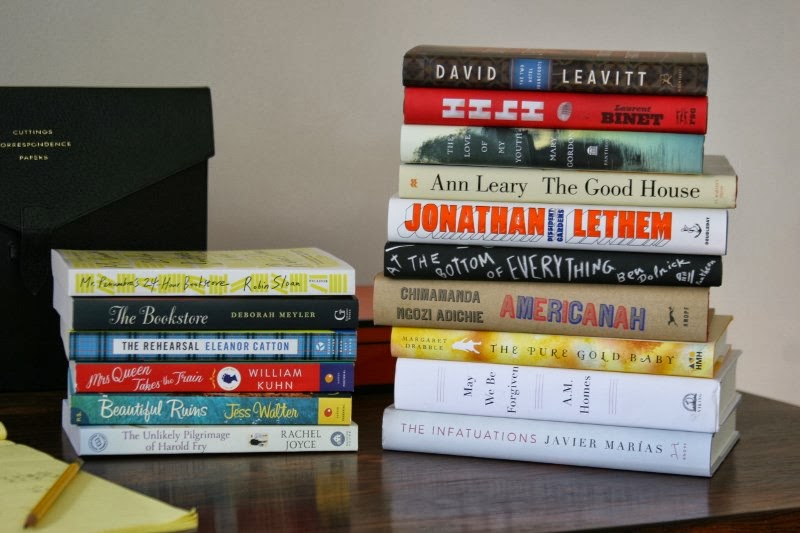
bf885-bookhaul

I’m kind of proud of myself. I’ve read 11 of the 16, didn’t finish two of them (but I tried), and didn’t read three of them.

Mr. Penumbra’s 24-Hour Bookstore by Robin Sloan
I bought this one because it is one of the two books discussed on the recent inaugural episode of the podcast Hear…Read This. Although I didn’t think this was high art, I really enjoyed reading this lighthearted library mystery. Unlike Simon and Gavin who hated it on Hear…Read This.

The Bookstore by Deborah Merler
I was about to say that I haven’t read this one yet. Then I couldn’t even find it on my shelves and was surprised that I would get rid of a book with that enticing title without reading it. Turns out I actually read it. British grad student at Columbia works in a bookstore, gets pregnant, relationship woes, etc. It had its issues but was an enjoyable read.

The Rehearsal by Eleanor Catton
Haven’t read it.

Mrs. Queen Takes the Train by William Kuhn
Really

annoyed me.

Beautiful Ruins by Jess Walter
Should have loved it: “…rocky patch of Italian coastline…” but really didn’t. Ended up not even finishing it.

The Unlikely Pilgrimage of Harold Fry by Rachel Joyce
Haven’t read it.

The Two Hotel Francforts by David Leavitt
Two couples wait in Lisbon in 1940 for a ship to take them back to the U.S. I should have loved this book based on the premise, but I found it boring, forced, and full of moments and scenes that didn’t feel authentic to me. It is possible that this was a case of me wanting it to be something it wasn’t meant to be.

HHhH by Laurent Binet
Also on the first episode of Hear…Read This. Pretty much loved it.

The Love of My Youth by Mary Gordon
Haven’t read it yet.

The Good House by Ann Leary
I really enjoyed this novel. An alcoholic real estate agent in New England.

Dissident Gardens by Jonathan Lethem
Gave up way before 50 pages. Tedious.

The Bottom of Everything by Ben Polnick
Takes place in Washington DC. Readable but rather amateurish.

Americanah by Chimamanda Ngozi Aichie
Loved it.

The Pure Gold Baby by Margaret Drabble
LOVED it. Probably my favorite Drabble now.

May We Be Forgiven by A.M. Holmes
Really liked it.

The Infatuations by Javier Marais
Every day a single woman has her morning coffee at a cafe in Madrid and everyday she sees the same happy couple. After not seeing the couple for some time she discovers that the man has been murdered by a homeless person. Our narrator, Maria, gets to know the widow and the dead man’s best friend. And then she finds out something shocking and creepy. Kind of hard to say much more about the plot without giving too much away.  I enjoyed many things about this book, but I think I would have liked it more if I had been under pressure to read it in time for a discussion I was set to have with my friend Pamela who was visiting from California.

For all its twists and turns, the novel is more of a character study. I found a certain rhythm to the chapters. They usually started with some plot point or notion related to the plot and then the rest of the chapter is Maria speculating and/or reflecting on that. She spends a lot of time in her head. I felt some of her habit of observation reminded me of Mildred in Pym’s Excellent Women which I was re-reading at the time. And all of Maria’s internal musings felt like Brookner to her. Something I wouldn’t have thought, but it does make sense to me. One thing I didn’t like was the ongoing references to a story by Balzac. I don’t always do well with this kind of intertexuality. Although, now that I think about it, I liked it in Providence by Anita Brookner. Maybe there is more connection between Brookner and Marias after all. I also felt like there were shades of Herman Koch in how it revealed a pretty depressing view of human nature. Overall I enjoyed it, but I don’t necessarily feel the need to go find Marias’s other books.


shelf by shelf : from Atwood to Bassani

shelf (2)Based on your comments, I would say that shelf by shelf is going to be a popular feature. I was surprised to see at least four people commented that they don’t keep their shelves in alphabetical order. That surprises me more than a little. Are they just all higgedly piggedly? Is it because I have mild OCD that I put mine in alpha order? Is it because I worked at a library in my formative years? I was actually kind of embarrassed about my shelves because they may be in alpha order by author, but they are not in alpha order by title by the same author. Thus my Atwoods, as you are about to see, are not in alpha order. Prior to moving out for our house renovation I always kept them in title order within author. Somehow I just haven’t gotten around to it since we moved back in. The other challenge I face is that when I own the entire output of a single author, my temptation is to put them in chronological order. You will see what that looks like in the coming months.

I don’t want to give away too much of what is to come, there are some anomalies for sure. But I will answer Liz Dexter’s questions: 1. In general my fiction is separate from my non-fiction. About 7 of the 35 shelves will be non-fiction. 2. Of course I keep some of my TBR books in various places in the library and next to my bed. But, most of them are intershelved with their brethren and sistren (I don’t think that is a word) that have already been read.

IMG_5455 (2)
Make sure you click on it. Plenty of room to zoom.

SHELF TWO : 34 books, 18, unread, 16 read, 47% completed

Atwood, Margaret – Bodily Harm (completed)
Atwood, Margaret – The Robber Bride (completed)
Atwood, Margaret – The Blind Assassin (completed)
Atwood, Margaret – The Handmaid’s Tale (completed)
Atwood, Margaret – Stone Mattress 
Atwood, Margaret – The Penelopiad (completed)
Atwood, Margaret – Moral Disorder (completed)
Atwood, Margaret – Murder in the Dark (completed)
Atwood, Margaret – The Tent (completed)
Atwood, Margaret – Bluebeard’s Egg (completed)
(I realize that not all of these are fiction.) For a long time The Robber Bride was my favorite Atwood, now supplanted by the MaddAddam trilogy. Very different books indeed. Now that I have a bit of a penchant for vintage sci-fi, I am quite curious to re-read The Blind Assassin for it’s sci-fi novel within a novel. Handmaid’s Tale will be considered a classic until the end of human life. A few of you mentioned loving Alias Grace. My best friend would agree with you, but it is actually my least favorite–and I have read it twice. And, in case you don’t see them here or in the previous shelf by shelf, I have read all of Atwood’s fiction, I just don’t own them.

Auchincloss, Louis – Tales of Manhattan
Auchincloss, Louis – The Rector of Justin
Auchincloss, Louis – The Book Class (completed)
Auchincloss, Louis – The Embezzler
Auchincloss come from old New York money. I loved The Book Class and look forward to reading the others.

Austen, Jane – Northanger Abbey (completed)
As a loose rule I don’t keep easily obtainable classics, not enough space in my library for that. The only reason I keep this great old Signet edition is that I love the cover.

Auster, Paul – The Book of Illusions
Auster, Paul – Winter Journal
Auster, Paul – Timbuktu
Auster, Paul – In the Country of Last Things
Auster, Paul – Sunset Park (completed)
Auster, Paul – Oracle Night
I’ve read far more of Auster’s work then the one you see in the list above. Sunset Park and The Brooklyn Follies (which I loved), fall into the straightforward, easy-to-read Auster. Others of his, like Man in the Dark, while enjoyable, take a bit more effort.

Bagnold, Enid – The Loved and Envied
Bagnold, Enid – The Squire

Bainbridge, Beryl – The Dressmaker
Bainbridge, Beryl – An Awfully Big Adventure
Bainbridge, Beryl – Watson’s Apology
Bainbridge, Beryl – The Girl in the Polka-dot Dress
For some reason I think I like Beryl Bainbridge yet I’ve yet to read anything by her. I think I have a few more of her books floating around the house somewhere.

Baird, Irene – John
I bought this one solely for the title. I have since learned that Baird was born in England but emigrated to Canada in 1919 and wrote a seminal novel about Canada in the Depression (but this one ain’t it).

Baldwin, James – Go Tell it on the Mountain (completed)
Baldwin, James – Giovanni’s Room (completed)
I’ve read these at least twice each. Baldwin is a master that deserves even more praise than he gets.

Barnes, Julian – The Sense of an Ending (completed)
I’m not a universal fan of Julian Barnes’s work, but I really did love this novel. Brilliant, sad, and deep.

Barbary, Muriel – The Elegance of the Hedgehog (completed)
I’ve read Gourmet Rhapsody and it didn’t bowl me over so much that I immediately went and picked this one up. I think I also got tired of seeing its ubiquity in the blogosphere a few years ago. I guess I am waiting until it is vintage.

Barr, Damian – Maggie and Me
Got this as a gift from some UK friends. It seems to be a sort of coming of age memoir/novel with Maggie Thatcher somewhere in the background.

Bassani, Giorgio – The Garden of the Finzi-Continis
I watched the film version of this novel in my college Italian class and I think it may be in that giant 1001 Books You Must Read Books Before You Die book. When I saw this somewhat beat up copy I had a very strong desire to reacquaint myself with the story of the family of Jews in Italy during World War II. At least that is what I remember.

NEXT TIME: Bates through Bowen

Reading Frenzy

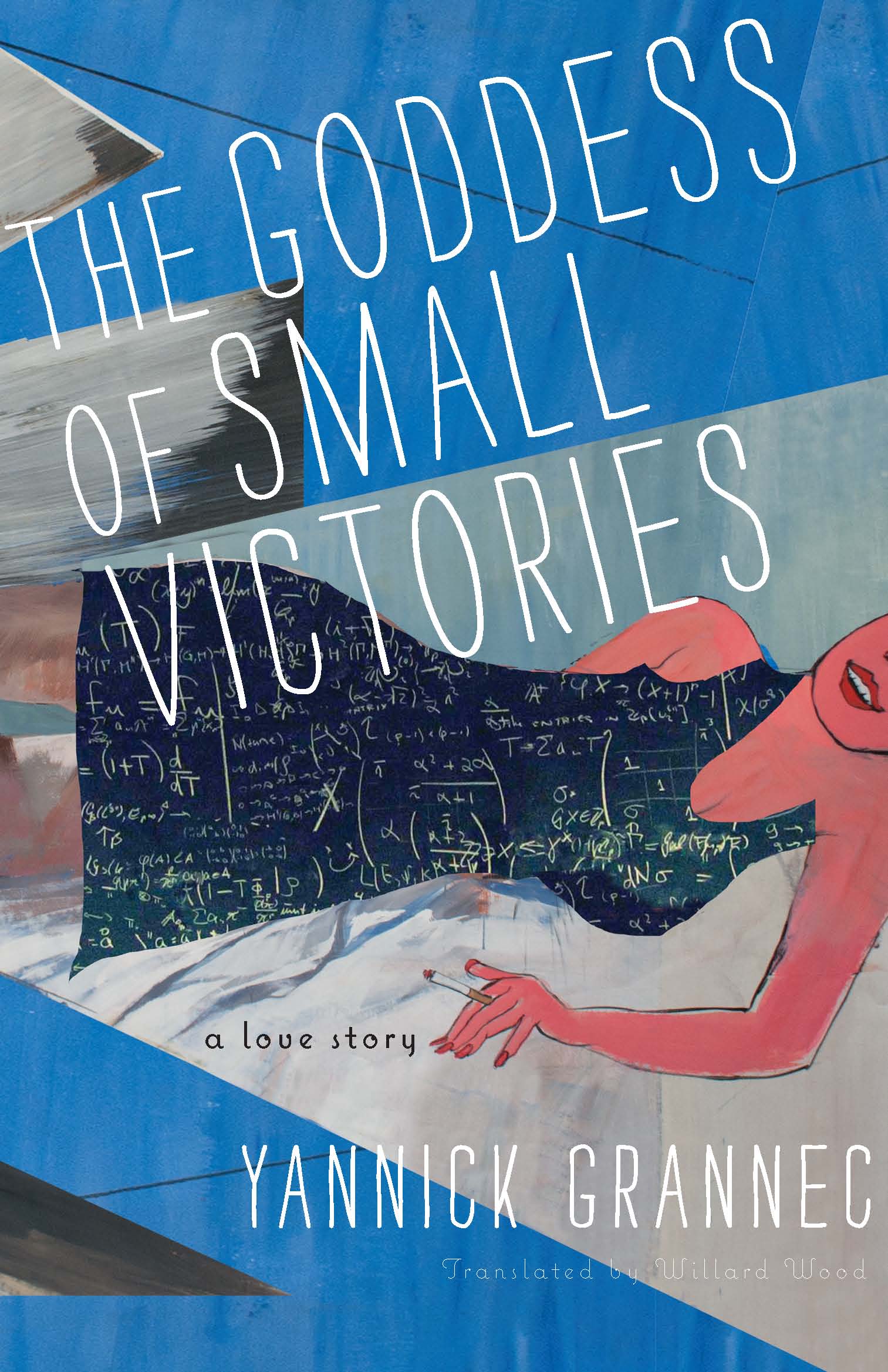
Goddess-CoverThe Goddess of Small Victories by Yannick Grannec
Let me quickly dispense with the plot premise so I can talk about what I liked about this book. In 1980 research librarian Anna is asked by her boss at Princeton’s Institute for Advanced Study to befriend Adele Gödel, the widow of math genius Kurt Gödel, so the Institute can get their hands on his papers for their collection. What follows is the alternating tale of Anna and Adele’s relationship in 1980 and the story of Adele and Kurt. Through the pages walk Einstein, Oppenheimer and a few other Nobel winners or two. At its base, the story is about Adele’s feelings that she wasted her life babysitting a genius and Anna’s potential to waste her own life. I enjoyed the roughly true, but fictionalized, story of the Gödel’s, but more than that, I found some of the end of life musings and issues facing Adele to be rather sad and profound. If you stripped out all of the specifics and about 200 pages you could have an Anita Brookner novel. Hmm. No wonder I liked it.

Time Stops Today by John Wyndham
A 51-minute audiobook of what must have been a short story. John Wyndham does not disappoint, but I do wish he had turned this into a novel, or at least a novella. Too many interesting points were elided and foreshortened. Four people find themselves caught in a sort of time interruption and are visited by a group of men from the future.

The Casual Vacancy by JK Rowling
Although this was a pity purchase at a newly opened used bookstore that I was trying to support, I found myself really liking it after about 14 pages. I tweeted as much and heard quickly from two bookish friends on Twitter that my appreciation of it wouldn’t last and that it was a poor sort of book. Well, I think my lack of literary background may make me just middle of the road enough to have really enjoyed reading The Casual Vacancy from cover to cover. Was it high art? No. Were there things that I wanted to tweak? Yes. But I tells you, I enjoyed reading it and I think if it had been written by someone other than JK Rowling, it would probably have been shortlisted for something.

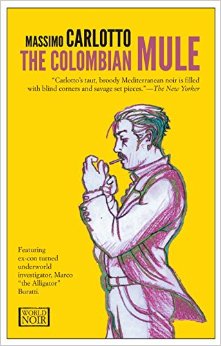
muleThe Colombian Mule by Massimo Carlotto
My second Massimo Carlotto “Alligator” hardboiled detective novel. Crime fiction is usually not my thing, but for some reason I love these books. So much so, that I have been buying used Europa Editions World Noir books just because. The main character is a reformed convict who still breaks the law plenty but seems to only do it for the right reasons. In this case a Columbian drug mule is arrested and the police use the opportunity to use extralegal means to right all sorts of wrongs until our hero gets the case.

Wigs on the Green by Nancy Mitford
I really liked Mitford’s The Pursuit of Love. I liked Love in a Cold Climate less. I found Don’t Tell Alfred tedious and Wigs on the Green falls into that category. Based on my early experience with Mitford and the milieu from which she issues, I always assumed I would love her to pieces. But after buying lots of pretty editions of her novels, I am now at a place where I just don’t care about her anymore. With some validation from Desperate Reader for feeling this way, I gave some Capuchin editions to Nonsuch Book and the rest went to the Friends of the Library. No more Mitford fiction for me. The letters and bios on the other hand still fascinate me.

The Meursault Investigation by Kamel Daoud
The Stranger by Camus
This was my second time reading The Stranger. I don’t remember what I thought of it the first time I read it. It’s very French and very, well I’m not sure what it is. A Frenchman, Meursault kills an Algerian on the beach. Just because he can, apparently. The only reason I picked it up again was because I wanted to read The Meursault Investigation, which picks the story some years later told from the point of view of the dead Algerian’s brother. I really liked the righteous anger in Daoud’s story.

hollow heartHollow Heart by Viola di Grado
I was really excited to see what this book was all about. The premise is that it’s the story of a woman who commits suicide, told from her point of view, after she is already dead. It was such an inventive idea, I was a little disappointed that one of the early (perhaps the main) things we learn is that she is upset over a break-up. What follows is a rather odd tale of what the dead do after they die, rather ghost-like behavior in this case. Di Grado also describes what happens to her physical body as it rots underground. I actually found that part the most interesting thing about the book. But if that is what you are interested in, better to read Stiff by Mary Roach.

Moby Dick by Herman Melville
Wow. I’ve tried to read this doorstop about three or four times in the past. I had totally written it off as something I would never read. Then a bookish bloke on Twitter tweeted that 2016 was going to be the year he finally killed that white whale. Suddenly inspired to join him, I thought that an audio version might help me get into the book. And it worked. At least to a degree. I liked the opening couple of hundred pages, but once the ship goat underway I started to lose interest. I was also fascinated by the bits later on where Melville describes the many different kinds of whales. But overall I found the book more tedious than anything. I’m glad it’s over. Every time Melville erroneously referred to whales as fish (many, many, many times) all I could think of was the Seinfeld episode called Marine Biologist where George keeps calling a whale a fish. And every time he does so, Jerry or someone else says “mammal”. I kept saying mammal back to the recording.

shelf by shelf : from Abbott to Atwood

shelf (2)I love studying pictures of bookshelves when people post them on their blog or Facebook or Twitter. I love being able to zoom in and see what is lurking in the shadows. Recently former blogger Polly posted a picture of her shelves on Facebook and I was excited to see that she and I have the same Faber edition of the Alexandria Quartet. Savidge Reads has his series Other People’s Bookshelves which is up into the 70s at this point. And then Stuck in a Book and I bonded over Phyllis Rose’s book The Shelf–although my initial enthusiasm waned while Simon’s waxed.

So today, I start a new series in which I am going to post each of my bookshelves, one at a time, and largely in alphabetical order. If I’ve done my sums correctly there should be 35 installments.

IMG_5453 (2)
Make sure you click on it. Plenty of room to zoom.

SHELF ONE: 37 books, 24 unread, 13 read, 35% completed

Abbot, Jane D. – Happy House

Acevedo, Chantel – The Distant Marvels

Ackerly, J. R. – My Dog Tulip

Ackroyd, Peter – English Music
I have not had very good luck with Peter Ackroyd, but I am always on the lookout for novels with a classical music theme.

Adams, Ruth – I’m Not Complaining
I pretty much buy any Virago/Dial paperback.

Adiche, Chimamanda Ngozi – Half of a Yellow Sun (completed)
Adiche, Chimamanda Ngozi – Americanah (completed)
Adiche, Chimamanda Ngozi – The Thing Around Your Neck
Adiche, Chimamanda Ngozi – Purple Hibiscus
I absolutely loved the first two Adiche’s I read. Half a Yellow Sun is devastating.

Agee, James – A Death in the Family
I’m not sure I will like this book. The prose poem, Knoxville Summer of 1915 with which the book opens is the source/inspiration for my original blog My Porch.

Alcott, Louisa May – Behind A Mask
I think this are some of her ghost stories. I’ve never read any of her work.

Allen, Walter – All in a Lifetime
Don’t know anything about this one. For some reason I have been buying pretty much any used book I come across from the Hogarth Press.

Ambler, Eric – Dirty Story
Ambler, Eric – The Schirmer Inheritance 
Ambler, Eric – Doctor Frigo
Ambler, Eric – A Kind of Anger (completed)
Ambler, Eric – The Nightcomers / State of Siege (completed)
Ambler, Eric – The Light of Day
Ambler, Eric – The Dark Frontier
Ambler, Eric – The Levanter (completed)
Ambler, Eric – A Coffin for Dimitrios (completed)
Ambler, Eric – Cause for Alarm
Ambler, Eric – Judgment on Deltchev
As you can see, I am an Ambler fan. Bookseller John in Houston turned me onto Ambler’s books, and as you can see, I’ve become a fan. Of those I have read so far, State of Siege and A Kind of Anger are my favorites.

Anand, Mulk Raj – Untouchable

Appelfeld, Aharon – To the Land of the Cattails

von Arnim, Elizabeth – Love (completed)
von Arnim, Elizabeth – The Enchanted April
(completed)

von Arnim, Elizabeth – The Pastor’s Wife
von Arnim, Elizabeth – The Adventures of Elizabeth in Rügen 
von Arnim, Elizabeth – Mr. Skeffington
von Arnim, Elizabeth – Vera
It is possible that von Arnim is one of those authors where the first book I read I loved and subsequent novels, not so much. The Enchanted April is wonderful. Love was good, but not a delight. The Caravaners (not pictured) was a DNF and Elizabeth and Her German Garden (not pictured) was a little tedious when not talking about the garden.

Ashworth, Jenn – A Kind of Intimacy (completed)
A fantastic read and a little crazy.

Atherton, Gertrude – American Wives and English Husbands
The title of this caught my eye but I knew nothing about the book or author. Her Wikipedia entry is fascinating. And she was prolific. I could be on to something good.

Atwood, Margaret – Oryx and Crake (completed)
Atwood, Margaret – The Year of the Flood (completed)
Atwood, Margaret – MaddAddam (completed)
Atwood, Margaret – Cat’s Eye (completed)
There will be more Atwood in the next installment. The first three listed here, however, are my absolute favorites. You can read them separately, but even better to read them in order and in succession.

NEXT TIME: Atwood through Bassani

Victoria 4:30

Victoria 430
Last summer when we were at Powell’s City of Books in Portland, Oregon I found myself going just a little crazy filling two baskets full of books that I had never heard of, by authors I had never heard of. Not everything I bought was new to me, but for some reason I did buy an awful lot that day that was a total risk. One of those books that I picked up was Victoria 4:30. Even before I saw the lovely cover drawing I suspected it might be referring to a train at Victoria Station in London. Given my predilection for train travel–especially of the vintage variety–I couldn’t help myself.

Even though I popped the book in my basket, I was thinking that I might be spending $5.95 on an unworthy book. Not only were both author and title unknown to me, but there was nothing else by the author on the shelf (suggesting he wasn’t very successful), and I’m always a little bit wary of old hardcovers that still have dust jackets in fairly good condition. It suggests to me that the book didn’t circulate much over the decades. So I was fairly convinced that I had made a purchase solely because I liked the nostalgic drawing of a train station on the cover.

I’m gong to hazard a guess that there are two moments of supreme bliss in a reader’s life that surpass all other pleasures of reading.

  1. Having the opportunity to curl up with the latest (or newest to you) novel of a favorite author.
  2. Taking a chance on a complete unknown and having it turn into something delightful.

Victoria 4:30 by Cecil Roberts
With all of this lead up (not to mention my raving about it on a recent episode of The Readers), it will come as no surprise when I say that I loved this book. There is no single plot, but for most of the book there is a single plot device. For the first 2/3rds or so, the reader is introduced to a cast of characters from very different walks of life and with very different motivations, all making their way to Victoria Station to catch the 4:30 boat train that will connect with the Arlberg-Orient Express. In total, we meet 13 main characters whose stories unfold just enough to let us know why they are getting on the train and where they are headed. Among them:

  • A famous conductor on his way to Salzburg
  • A young Slavonic prince who has to leave his English boarding school to assume the throne after his father’s assassination
  • An English nun who refuses cancer treatment in order to live out her last days at her convent in Transylvania
  • A grand, old, Russian General who has been reduced to being a tour guide to rich tourists in order to make ends meet
  • A bachelor who is fed up with his ungrateful extended family who treat him like their own person bank book, who decides to go on an adventure and leave them all in the lurch
  • A prolific author facing unprecedented writer’s block who is in search of a plot

Once we are introduced to all 13 characters we see how they cross paths and interact (or not) on the journey, and we get resolution for at least some of the stories as various passengers get off along the way and meet their fate. Although the book feels very genteel in manner, it doesn’t shy away from getting real and story lines have dimension and depth. Not every story gets resolved and some resolved in ways I didn’t like, but that is just me wanting 13 happy endings.

I just looked Roberts up on Wikipedia and note that he published about 40 books in his life. One called Grand Cruise, makes me think he might have repeated the Victoria 4:30 formula on a ship. To which I say: “Yes, please.” With so many books published, I think I have just discovered new quarry for my book browsing adventures. And on a side note, Roberts had a way of describing some of the male characters that makes me think he may have had some sugar in his water.

This would make a perfect Persephone offering. I might need to drop them a line.

An Electrifying Detective Story

1004_may_5th_1955

[All photo credits:Vivian Maier from the Maloof Collection.]

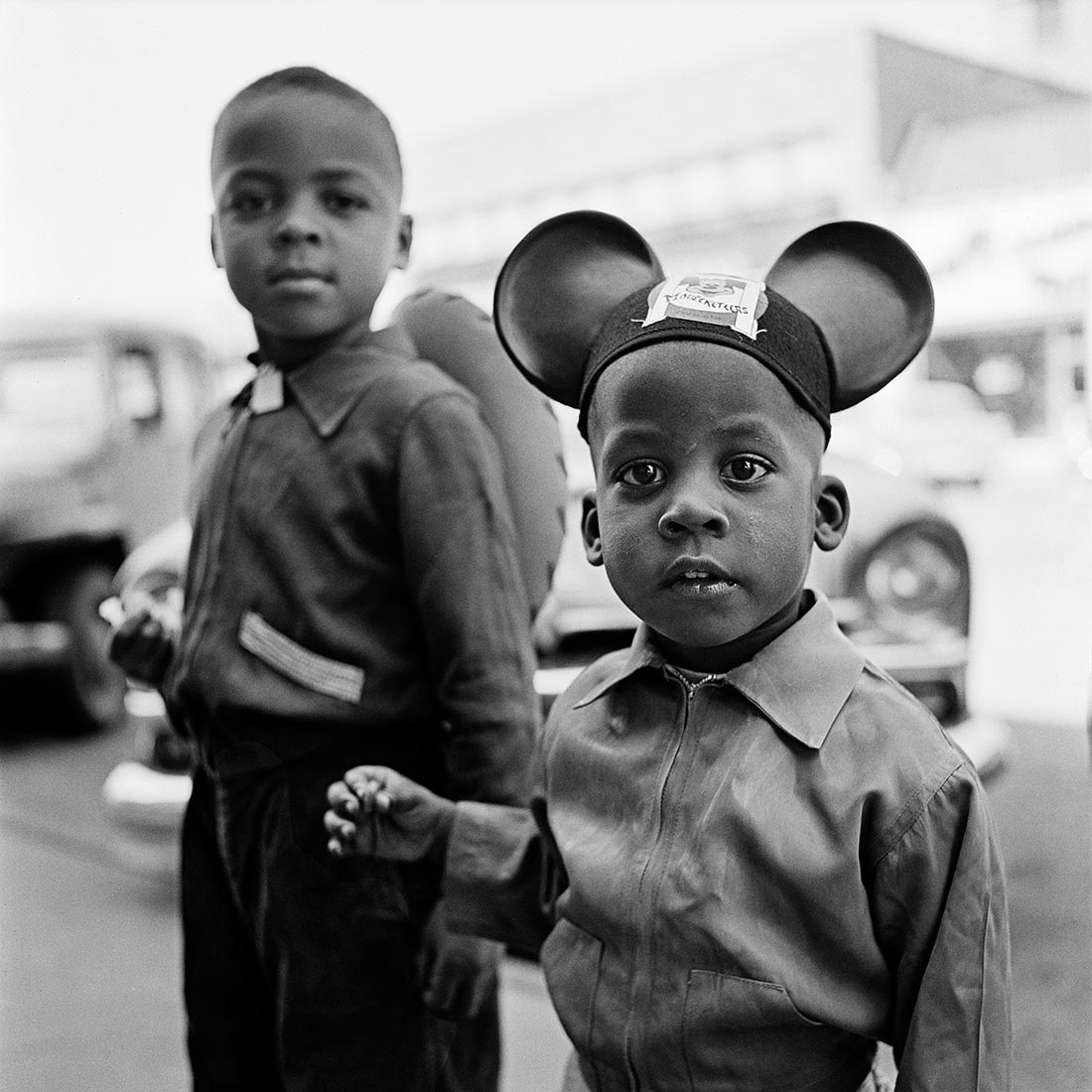
I’ve said it before that I am prone to hyperbole, but there is something about the documentary Finding Vivian Maier that makes me want to jump up and down and scream about it until every single person I know sees it.  In 2007 a young historian buys an auction lot of 30,000 photo negatives that he hopes will provide some illustrations for a book he is writing about his Chicago neighborhood. He doesn’t find anything for his book, but he does find an artist and a thoroughly compelling mystery.

One does not have to be a mystery lover, a history buff, or a photography expert to fall in love with this story. But if you are one or more of those things, it is possible your head may explode. Here’s what happens: John Maloof buys a bunch of negatives at an auction. He discovers that the images are unexpectedly good, museum-grade, photos. He knows nothing about the photographer–only knows her name, can’t find even a whisper about her online. When he does track down information about her, he finds out she spent her life working as a nanny and never showed her photos to anyone. He also discovers that Vivian was more complex and darker than she seems at first.

I will say no more about plot and I deliberately left out details so I won’t give too many surprises away. Maloof reveals Maier’s story quite masterfully, setting up the mystery, taking us along on the investigation, and revealing the woman behind (and some times in front of) the camera. And it is an amazing story. It has the feel of a novel and it is ripe with possibilities for a novelist.

What will also be attractive to book lovers is the fact that there is so much in the film that will make the detective/historian/archivist in you tingle with excitement. After Maloof tracks down some people who knew Maier, he helps them clean out a storage unit that belonged to her. In the process, he ends up with thousands of rolls of undeveloped film, letters, receipts, tickets, clothing, hats, shoes, and hundreds of other things that help him unravel the mystery. In the film, Maloof lays out all the artifacts on the floor. It’s almost like he went to a store and bought a life/mystery in a box. A sort of life-sized game or kit that gave him just enough information and material to get him started but left big holes in the story for him to fill in.

VM1976K05714-08-MC

This film appealed to me on so many levels. It reminds me of a few mysteries I have tracked down myself, but in much less spectacular ways. The time I tracked down the life of book cover illustrator Jackie Shulman and gave her a digital footprint that was all but non-existent previously. Then there was my 20-year effort to find the 1960s folk group The Womenfolk. The book I got to research and write about a 160-year old insane asylum. Playing around on Ancestry.com. You get the picture. I love that kind of mystery. Is it any wonder this film made me a little delirious?

museum

They’ve recently added it to Netflix streaming which is how I came across it. The film came out in 2013 and was nominated for an Academy Award. As usual I am right on top of things.

VM195XZ06951-04-MC