LOS ANGELES – The awards for best reads of 2015 were awarded last night by the Academy of Reading Arts and Sciences during a live telecast from Dorothy Chandler pavilion in Los Angeles. This year’s ceremony brought out the usual mix of gowns and glamour as the world’s literati arrived to recognize the achievement of the books that most moved, enthralled, and entertained over the past year. Thomas Otto, president of the Academy reflected on what the awards mean to the reading community “This is one night of the year where we can look past all that separates us and forget about all the troubles in the world, and just come together to celebrate the best in fiction.” When asked about the exclusion of wildly popular work by Lana Danagihara and anything actually published in 2015, Otto pointed to Rachel Cusk’s novel Outline. After reporters pointed out that Outline was actually published in 2014, Otto seemed momentarily deflated, but defended the Academy’s decisions “Look, the Hoggies shine a light on the best and brightest. Without the Academy’s work the reading public really doesn’t have a clue.”
Controversy of another kind spilled onto the red carpet when Margaret Atwood excoriated E! News reporter Giuliana Rancic on-air for asking probing questions about her books while failing to ask even one question about her outfit. “Would you ask me such deep questions if I was a man? One of these years I wish one of you bottom feeders in the press would ask me who made my gown.” Later, Rancic defended her red carpet questioning “I ask the questions our viewers care about most and they are much more interested in alternative interpretations than they are in Atelier Versace.”
Despite the red carpet encounter, the ceremony went off without a hitch. Host Neil Patrick Harris wowed the audience with a stunning musical opener about subject/verb agreement, but more importantly kept the pace of the awards moving. At a brisk 9 hours and 14 minutes, this year’s telecast was the shortest ever. Harris’s secret? Waving boxes of Franzia wine and cubes of supermarket cheese just off stage but in sight of the the evening’s winners. When asked where he got the idea, Harris grinned “I know what authors like.”
I am determined this year to write something, no matter how inane, for every book I have read. I’ve already done a few omnibus posts in recent months to try and clear up the enormous backlog and this promises to be the last. Knowing what I am reading now, anything I will finish before the end of the year will be easily, and I hope interestingly dispatched. My reading tends to slow around the holidays as well so that should make it easier. I’m clearly not going to make it to 100 this year, but maybe a nice even 80.
This is a case where the cheesy cover actually closely approximates the text and tone of the book.
The Postman Always Rings Twice by James M. Cain
I think I probably grabbed this audiobook in a recent sale on Audible because the title was so familiar. I thought that was the case because I knew it as a movie title, but it turns out it is also one of the Modern Libraries Top 100 novels of the 20th century. I can see why. It’s a fun, fast-paced read about a couple of miscreants who like rough sex and don’t think twice about murder. In a way it reminds me a little bit of the fabulous Tobacco Road. They are roughly the same vintage and portray rather tragic characters who nonetheless make you chuckle at them rather than with them.
Emma by Jane Austen
Not having read much Austen, I decided to join in the December read along of Emma in honor of its (or Austen’s?) 200th anniversary hosted by Dolce Bellezza. Well, it was a bit of a mixed bag for me. I’ve enjoyed all of Austen’s films, but I am not in love with her books. I definitely enjoy books that are more about manners and atmosphere, but I just don’t find hers all that compelling. In terms of the story itself, I find Emma a completely unpleasant person. I love the crazy, uncouth, social climbing Mrs Elton, and the nattering Miss Bates. But Emma herself, not so much.
The Acceptance World by Anthony Powell A Buyer’s Market by Anthony Powell
Books two and three of Powell’s twelve-book series A Dance to the Music of time. All twelve of these books, which consist of 3,300-some pages and are most often found in four, three-book volumes, count as one single book on the Modern Library’s Top 100 list. That is absolutely nutso and I was so happy to be finally making progress in the series after having a lovely four volume-edition on my shelves for about five years. I enjoyed the first book which takes place during the narrator’s school days, but I must say I found the second two to be a little tedious. From what I understand the series sweeps through the 20th century following the same cast of characters. It reminded me somewhat of William Boyd’s excellent Any Human Heart. But I think Boyd does it better–and his book is actually enjoyable to read. I don’t think I am going to continue with the remaining nine books. If I do, it will only be to tick another box on my Modern Library list.
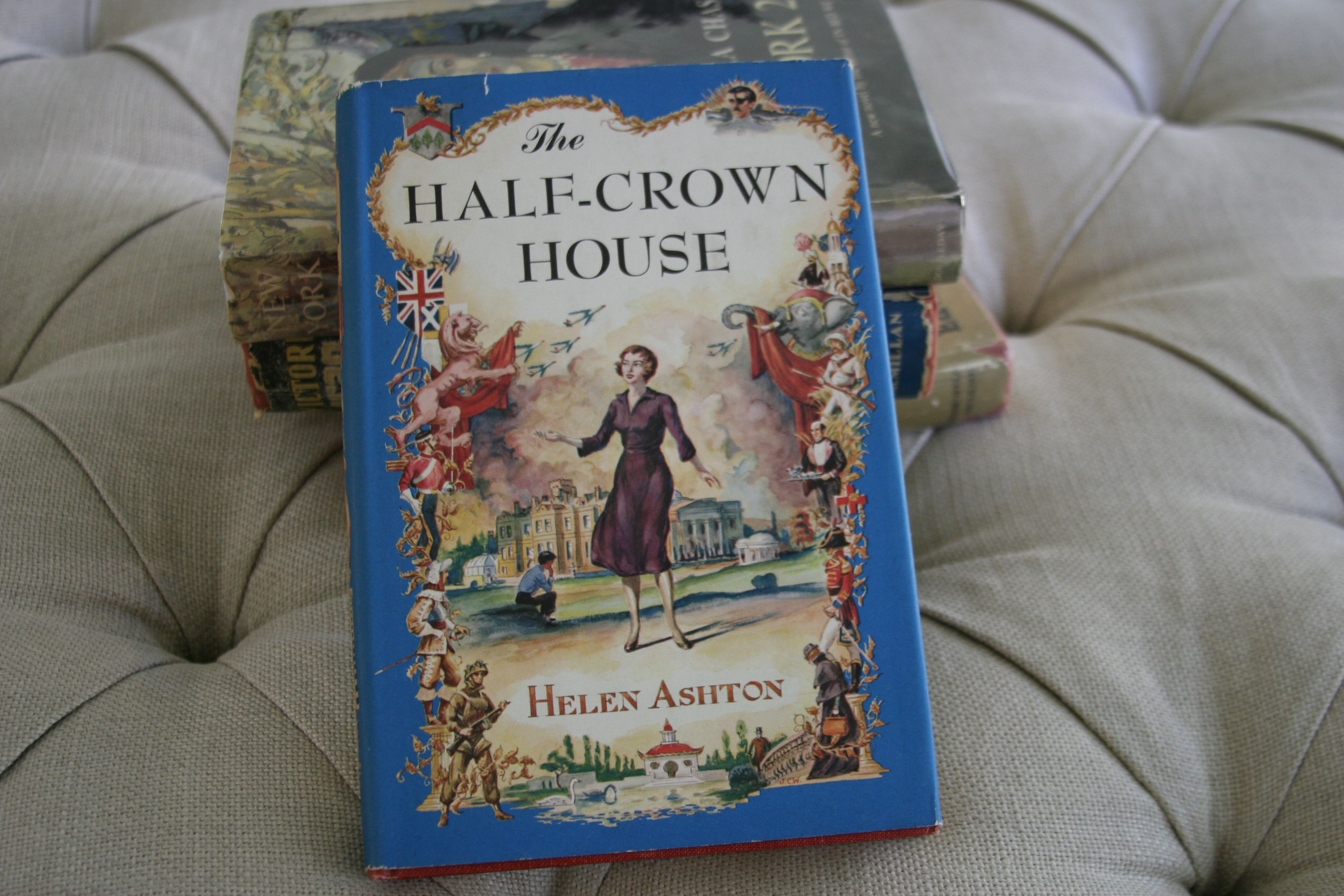
Half-Crown House by Helen Ashton
I stumbled across this book and its fabulous cover during one of my book buying binges this summer and thought it was worth six dollars regardless of content. It was only after a blogger friend of mine here in DC posted a picture on Facebook of his recently finished copy of the exact same edition that I picked it up to read it. It was at that same time that I realized that Ashton also wrote Bricks and Mortar which Persephone reissued. I thought Bricks and Mortar was an enjoyable, interesting novel about a female architect so I expected more from Half-Crown House. But the book, which is about life in and around an old manor house that is open every so often to tourists for a half-crown, is really quite boring. I found myself waiting for it to be over. I think others will find it much more interesting than I did.
Fifty Days of Solitude by Doris Grumbach
Novelist Grumbach’s curated journal from 50 days of self-imposed solitude. I enjoyed it, but it wasn’t as good as Grumbach’s wonderful novel Chamber Music which I read this year and it didn’t enchant me like May Sarton’s wonderful journals.
Red Anger by Geoffrey Household
Not as good as Household’s Rogue Male, but they have some things in common and has a lot to recommend it. This one is a cold war spy chase through the British countryside. I love this kind of book.
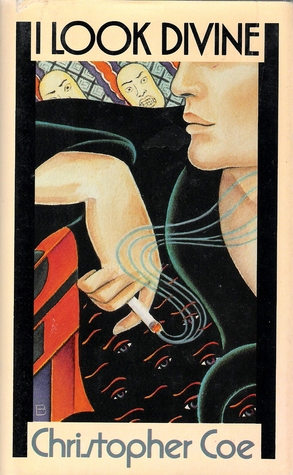
I Look Divine by Christopher Coe
I found this slim volume by chance and picked it up as an afterthought when I spent an afternoon outside of New Haven in a giant book barn with about 2 million books. I’m not quite sure what to make of the story itself but I found it so sad and beautiful. Coe wrote two books before he died in 1994 at age 41 from AIDS-related complications. As I read this hard cover first edition with a very tight binding, I couldn’t help but think of this clearly unread copy, discovered like a needle in a haystack, as a metaphor for all those authors and artists and everyday people who died too young. In the bigger picture all human life is fleeting, but I was taken with the feeling that opening up this almost forgotten volume was breathing life back into the tragically short life of a talented man.
The Bedwetter by Sarah Silverman
A hilarious, fun, but not inconsequential memoir of the hilarious, fun, and not inconsequential comedian Sarah Silverman. And I listened to Sarah read it so it was like being best friends with her for a week.
Latest Readings by Clive James
With a cancer diagnosis Clive James reconsiders his reading past and his reading future. It was an interesting read but James appears to be a much more serious reader than I am so my enjoyment could only go so far. He was, however, responsible for getting me off my ass to open up A Dance to the Music of Time.
The Musgraves by D.E. StevensonAfter
I think with this little blurb, I am going to vow to not write recaps or impressions of D.E. Stevenson’s novels. I love them all in varying degrees, but they definitely all fit into a niche. So unless I read one that breaks free from the chaste-until-married, everything-turns-out-great, mold, I am going to forgo saying anything about them. We’ll see.
The Professor’s House by Willa Cather Rebecca by Daphne du Maurier Any Human Heart by William Boyd
What do these three books have in common? Not much, except that they were part of the reading challenge that Simon and I participated in with Ann and Michael of Books on the Nightstand. The four of us each read favorite books chosen by the other three. I chose the Cather, Simon chose Rebecca, Michael chose Any Human Heart, and Ann chose The Sparrow by Mary Doria Russell which I quite liked and wrote about in 2014. I won’t say much about any of them here and will instead direct you to the episode of The Readers where we chatted about two of them (with links to the BOTN chat about the other two). However, in short, after reading it for a third time the Cather is still one of my favorites, on listening to the audio version of Rebecca, I am now a fan of the book which I didn’t like when I first read it, and I thought Any Human Heart was a wonderfully epic book that was a joy to read.
A Coffin for Dimitrios by Eric Ambler
You can never go wrong with Ambler if you are looking for intelligent, vintage, spy thrillers. Having said that, this one was not my favorite Ambler. It might have been that I read it on a river rafting trip which may not have been conducive to that kind of taut writing.
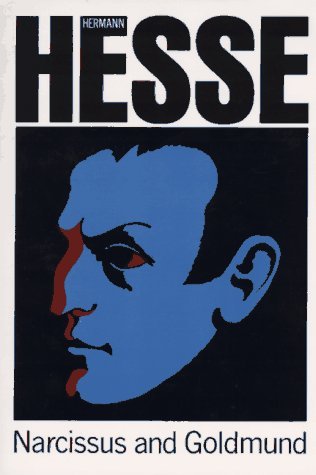
In many ways re-reading Narcissus and Goldmund by Hermann Hesse was the re-read of all re-reads. It was a novel I read in high school and considered it to be one of my favorite books. It was also the first Hesse novel I read and it spurred me on to read most of his other novels and short stories over the years. Vaguely remembering what it was about (think medieval monastic cloisters) I wasn’t sure if I would still find it interesting. When I read it the first time I was highly impressionable and read it for a very specific reason. As a young gay-in-training in the mid 1980s in smalltown Minnesota, I often found myself reading gay novels that were over my young head but venerated them anyway because they were hard to come by. My only source of gay fiction was to buy them at A Brother’s Touch bookstore in Minneapolis and my $3.35 an hour part-time job at the Elk River Public Library didn’t leave much spending money for books.
In one of those contemporary gay novels–I think it may have been A Boy’s Own Story by Edmund White–the main character talks about reading various books and references the gay subtext of Narcissus and Goldmund. Since this could easily be found at the library–perhaps even the school library–I was quick to pick it up and dive in. And the author wasn’t wrong. The story of monk-in-training Narcissus and the slightly younger, and beautiful pupil Goldmund was just the thing to warm the heart of a young gay boy who often felt isolated in a sea of hetero classmates all able to live their high school romances out in the open. Narcissus and Goldmund have a chaste but very close relationship that ends when Goldmund meets a girl and spends the rest of his life drifting, and boozing, and womanizing, and murdering, and sculpting. When the two are reunited towards the end of the book they speak of their love for each other in a way that is hard to believe is not homosexual in nature. I know that in less macho times, same-sex friendships were written about using much more intimate language than we would today, but even taking that into account there is something that feels very gay about these two. And so I choose to believe that were indeed in love with each other. I need to go find out what Hermann Hesse had in mind when he wrote this, because it seems to me that it couldn’t have been an accident.
For decades I have conflated Hesse (1877-1962) and the composer Gustav Mahler (1860-1911). Not that I ever got them confused, but in my head they just seemed to go together. Both are of Teutonic origin and of a similar vintage, and both explore fate, love, existence, faith, art, body, and soul. And Narcissus and Goldmund certainly does that. No doubt the young practicing Catholic me would have appreciated the religious exploration more than the agnostic adult me, but not so much of difference that I couldn’t still appreciate it.
Overall I was surprised by how much of this novel stayed with me over 30 years and how much of it didn’t. There were more than a few moments when I could vividly remember what it felt like to read it the first time. In particular I remember reading it one day in class when we had a substitute teacher. In the first place I remember how great it was to be transported by this book into a lovely, interesting place while I sat in the middle of gabbling high school students. In the second place, the young female substitute teacher we had that day said “Oh, you are are reading one of my favorite books.” Words to make a young book nerd’s heart soar for sure. And then, it wouldn’t be high school without the bullies, one of my regular tormenters said “It must be written by [insert name of well-known local gay]”. I was crushed that this a-hole had ruined a lovely moment I was having with the sub, and self-conscious that he had somehow guessed the gay content of my book. Of course he didn’t, but the threat of exposure seemed real enough. I tell this story somewhat apropos of nothing other than how much this book, and the reading of this book made a mark on my young reading life–and in some ways on life in general.
So did it hold up after so much history? It did. I liked it for some of the same reasons I did 30 years ago and was intrigued to become reacquainted with the plot and some forgotten themes. Is it still one of my favorite books? No, not really. I don’t even think it is one of my favorite Hesse books, but a fantastic book nonetheless.
Most of us who love to read novels have read dozens of them about the horrors of Nazi Germany. We’ve read incredibly powerful, sad, moving, stories of people who fought against fascism, about those who survived concentration camps, and about millions of people who died at the hands of society who chose to elect a narcissist spewing hate and bigotry. We’ve railed against the atrocities, we’ve wept for the dead, we’ve marveled at how something so seemingly impossible became possible. We vow, never again, never again, never again.
So why now do we sit on our hands and talk politely about books?
When I first started my blog I would occasionally get political but since about 2009 I’ve mainly avoided such posts. But if there were ever a time for us to dust off our outrage and make the connection between all those WWII novels and what is happening right now in the U.S., the time is now.
Do it for The Glass Room
Do it for HHhH
Do it for Sarah’s Key
Do it for Maus
Do it for The Boy in the Striped Pajamas
Do it for Schindler’s Ark
Do it for Everything Is Illuminated
Do it for Sophie’s Choice
Do it for The Shawl
Do it for The Assault
You choose. You’ve read some. Just do something, say something, don’t stay quiet.
 LOS ANGELES – The awards for best reads of 2015 were awarded last night by the Academy of Reading Arts and Sciences during a live telecast from Dorothy Chandler pavilion in Los Angeles. This year’s ceremony brought out the usual mix of gowns and glamour as the world’s literati arrived to recognize the achievement of the books that most moved, enthralled, and entertained over the past year. Thomas Otto, president of the Academy reflected on what the awards mean to the reading community “This is one night of the year where we can look past all that separates us and forget about all the troubles in the world, and just come together to celebrate the best in fiction.” When asked about the exclusion of wildly popular work by Lana Danagihara and anything actually published in 2015, Otto pointed to Rachel Cusk’s novel Outline. After reporters pointed out that Outline was actually published in 2014, Otto seemed momentarily deflated, but defended the Academy’s decisions “Look, the Hoggies shine a light on the best and brightest. Without the Academy’s work the reading public really doesn’t have a clue.”
 hogglestock