I. Love. This. Book.

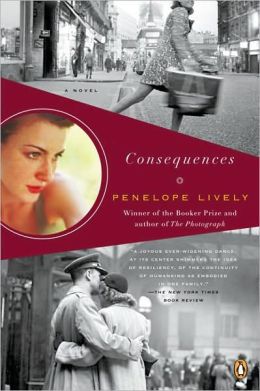
consequencesWhen I first read Consequences by Penelope Lively in 2009 I liked it so much I gave it a 9 on my 10-point scale. Just one point off being an all-time favorite. Having just finished listening to the audio version I’m not just reminded of how much I like the book but I am inclined to upgrade it to a full 10 out of 10. In fact, liked it so much that I decided to write this post as soon as the narrator said “The end.” (I’m not sure she actually did, but you get the point.)

As is often my challenge, I have many things to say about a book but the thought of having to come up with some coherent, cogent review is beyond my patience and abilities. So, it’s time for another bulleted list.

  • The book begins in 1934 when artist Matt meets Lorna on a park bench in London. The story ends with their 44 year-old granddaughter Ruth contemplating the balance of her life. In the middle is all the wonderful and tragic and thoughtful things that happen to them, their daughter/mother Molly, and their small, somewhat unconventional family.
  • This one will appeal to the Bohemian in you. A woodblock artist, book maker, writers, librarian, gallery employee, arts administrator, and a poet all walk through the story at various points.
  • Lively has the mind of an historian but also of an historiographer. She not only tends to pepper her novels with historical bits and bobs but she often explores how we know what we know about the past and contemplates more than a little about the effects of time and perspective on how we feel and understand things. But she is subtle about it and it never feels pedantic or preachy.
  • Lively the person looks fairly conventional and perhaps even a little staid, but her characters are rarely so. Don’t get me wrong, they aren’t wild and they tend not to do crazy or silly things but they burn with passions and determination that appeal to me. And she writes about sex, relationships, and faith (or lack thereof) in and open, and often progressive way but always on the decorous side.
  • Despite the many tragedies that happen along the way, so many wonderful things happen as well. And for both the good and the bad there is the recurrent theme of how certain moments, some are choices, some are not choices lead to, um, consequences–outcomes, new trajectories, triumph and tragedy. Something that occurs in more than a few of her other novels as well, most notably perhaps, and most recently in How it All Began.
  • There was a really wonderful story in Slate this week about Persephone Books and it got me to thinking just how perfectly Consequences would fit in with their catalog. (Now that I think of it they have already published Consequences the 1919 novel by E.M. Delafield.) I’ve often reduced the output of Persephone to being cozy, but after reading the Slate piece, I realize I have been selling them and the books short. They are about the domestic side of life for sure, but for as much as I like that kind of thing, I think I have been slightly dismissive of how important that is not just for my own pleasure but for chronicling and understanding civilization.
  • Would do really well adapted to large or small screen. Although when looking up whether or not someone has already done so, I came across Ursula K LeGuin’s less than glowing review of the book in The Guardian in 2007. I won’t link to it.

A book so rare I didn’t know it existed

In October 2011 I re-read a childhood favorite of mine. I waxed rhapsodic about it here.

In June 2014 I blogged about how I found that book while I was picking up clothes at my local dry cleaners. This was no small deal. A book long out of print, almost impossible to find online and there it suddenly was in a pile of free books at my dry cleaners. And on top of that, it was actually the same exact copy that I had checked out in 2011 from my local library. It had been withdrawn from the collection. Probably when I returned it. It probably never made back onto the shelf. The book was just meant to be mine.

002
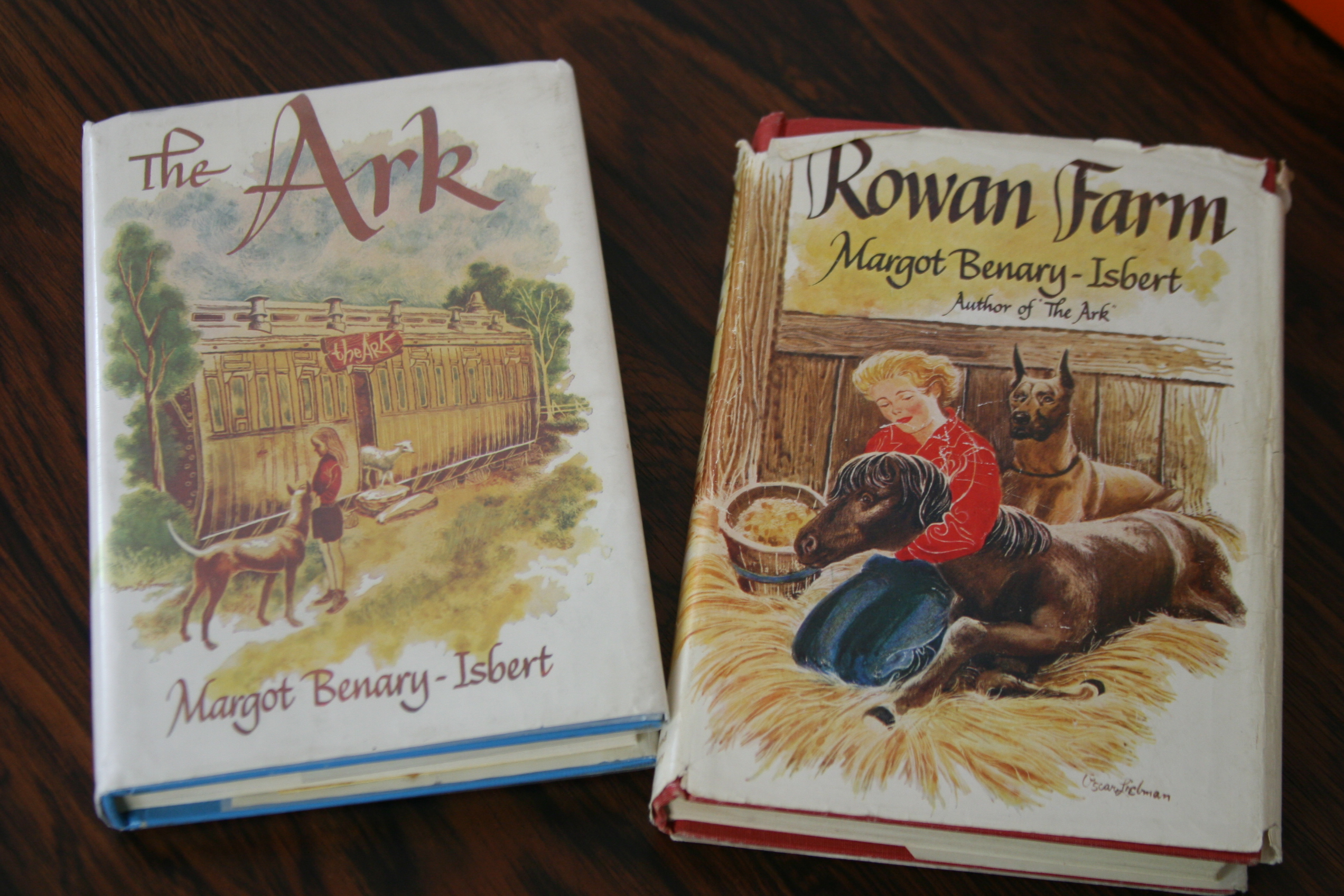
The Ark by Margot Benary-Isbert

Flash forward to the spring of this year when Simon of Stuck In A Book was visiting DC. We trekked out to suburban Maryland to comb through a used bookstore or two and ended up at Second Story Books‘ warehouse store in Rockville. In that warehouse store they have something called ‘The Annex’ which is a very large space crammed full of dusty old books in no order whatsoever. And I mean no order. A 1950s anatomy book next to a Pat Buchanan political screed next to a Campbell Soup cookbook. In many places the books were on the shelves three-deep. Knowing that I didn’t have hours and hours to spend in The Annex I almost skipped it entirely. But since I wasn’t looking for anything in particular I decided I would choose just one shelf section and see what I could find. Much to my surprise I started finding some things that I thought I should take home with me.

And then.

I was haphazardly pulling out some books to get a look at what was in the third row back and something familiar-looking caught my eye.

Rowan Farm, a sequel to The Ark by Margot Benary-Isbert.

Yes, my friends, a sequel to one of my favorite childhood books. A sequel I had no idea existed. A very hard to find sequel to a very hard to find kid’s book published in the 1950s. And for about 3 bucks. Could this really be true? Yes it could and it was. I know with little doubt that the finding of these two books will remain the great book finds of my life. Not because they are necessarily my favorite books of all time, but the way in which they found me. All the particles in the Universe conspired to bring these two objects into my possession. Just when they had probably given up hope. Each just an inch or two away from being pulped and returned to the earth. Generations of kids wanting to read about other kids milking pet goats and making pretty curtains for the old rail car they were living in, will never know they want to read about goats and curtains.

Now I need to spend the rest of my life figuring out how to pass them on to appreciative stewards. They’ve come too far to be lost again.

004
Reunited and safe. The Ark and Rowan Farm by Margot Benary Isbert

Authors in their natural habitats

Kings-roadRecently I got an email from Sophie Smith, a writer in London, who recounted a description of the time she bumped into one of her favorite authors out on the street. It got me thinking about the likelihood that many of you have encountered authors over the years and that it would be interesting to hear your stories. So what say you? Do you have an author encounter you’d like to share? With any luck I would like to make “Authors in the natural habitats” a regular feature at Hogglestock. Shoot me an email and tell me your story, lets do a little guerrilla author bio project.  (hogglestock [at] outlook [dot] com)

In the meantime, here is Sophie’s lovely story.

 I have been spotting Anita Brookner on and off for years in the King’s Road where she lives and as I am a writer myself I have always felt a little thrill when one of these sightings has occurred. She is invariably in a skirt and jacket, very often in navy blue with court shoes to match, always chic but never showy – and that’s just for a quick dash to the shop to get some milk. One imagines her clothes may come from Jaeger in King’s Road or similar. Once, I bumped into her in Mark’s and Spencer’s which, if you are familiar with King’s Road, has a small clothes section at the front and a food section at the back, with a preponderance of upmarket ready meals-for-one perfectly suited for the many ageing Chelsea widows (and a sprinkling of spinsters) who live in the network of pretty terraced houses and flats of SW3. And there she was, rather frail on her pins, carrying a frugal-looking carrier bag of groceries and heading directly for me. Instead of observing protocol and discreetly pretending not to recognise this literary giant, thin and delicate as a sparrow with her seventy plus years at the time, I decided to risk a formidable rejection and very politely said.
   “Excuse me? Professor Brookner?”
   “Yes?”
   “I hope you don’t mind me stopping you but I’ve just finished your new novel Leaving Home and I just wanted to say how very much I enjoyed it. I think you’re the most brilliant writer.”
   Her face lit up and she looked completely surprised.
   “No, not at all. Oh, well that is nice. Thank you so much. I’m so pleased you liked it. That is nice. Not at all.”
   And we parted.


All the books I cannot read

Nice cover. Too bad about the insides.

I might regret this post. Not just because some of you are going to think I am nuts and incapable of appreciating a good novel if it bit me on the butt. But also because I could see myself in the not too distant future picking them up, reading them, and deciding that one or both is brilliant. But when have I shied away from hyperbolic pronouncements?

I once read Anthony Doerr’s novel About Grace and found it less than, oh I don’t know, less than interesting enough to care about or remember. So it was with trepidation that I gave into the urging of various blogs and reviews and a friend or two and bought Doerr’s latest bestseller All the Light We Cannot See.  At first I was thinking I would like the book as it begins in the coastal town of St. Malo in the final throes of WWII. Then, rather too quickly it all started to feel a little too magical for my taste. Not necessarily in the literal, supernatural, sense, but in the sense that every detail was clearly going to be some illuminating, magical metaphor that would, no doubt, be extremely profound and moving. Magic rocks and special keys and secret compartments and…ugh. And then magic orphans in Germany who would most certainly have some sort of meaningful encounter with the magical blind girl in St. Malo. And it was all going to be deep, very deep. And I was going to learn something about human nature, and loss, and most importantly about myself. I couldn’t wait.

I ended up putting the book down really, really early on. Less than 20 pages in I think. So early on that I couldn’t remember what I didn’t like about the book and picked it up again a day later thinking I was going to like this WWII novel after all. And within a page I remembered why I put it down in the first place. Blergh.

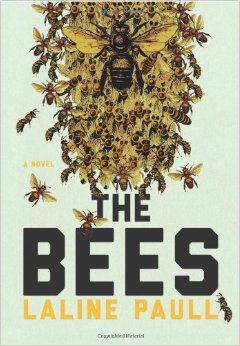
beesAnd then came The Bees by Laline Paull. This one has been praised in many circles and was shortlisted for the Bailey’s Prize. Knowing this, I tried to let myself go and forget about the anthropomorphism of Flora 717 and the rest of her kin in the hive. As I read I couldn’t stop thinking about all the leaps of logic I was going to have to take in order to get through this one. Emma Straub in her New York Times review of the book sums up my early reaction:

At first, the reader questions everything. Is this really how bees are born? Is this how they communicate? By the middle of the book, I stopped wondering which tasks Paull had imagined and which were real, because they all seemed equally plausible.

Unlike Straub, however, I was unwilling to get beyond this part. There are two things I want to read about bees at this point in my life: 1) What sorts of flora John has planted in the garden to be a haven for native bees, and 2) That scientists have figured out definitively what is killing off bee colonies and how we can fix it. Short of that I don’t care so much. Throw in the fact that The Bees seems to be about a girl bee with a strong mommy urge and I really don’t care. You want to write a book about a rebellious bee? How about one where a boy bee has a mommy urge.

If I hadn’t just forced myself to finish How to Be Both I might have given one or both of these books another chance. But as it stands, I have no patience for either of them. There is guilt attached to this because of some of the personal testimony I have gotten from friends on both of these books. But we will just have to find other things on which we can agree.

Halfway through the Bailey’s Prize shortlist

HALF WAY THROUGH

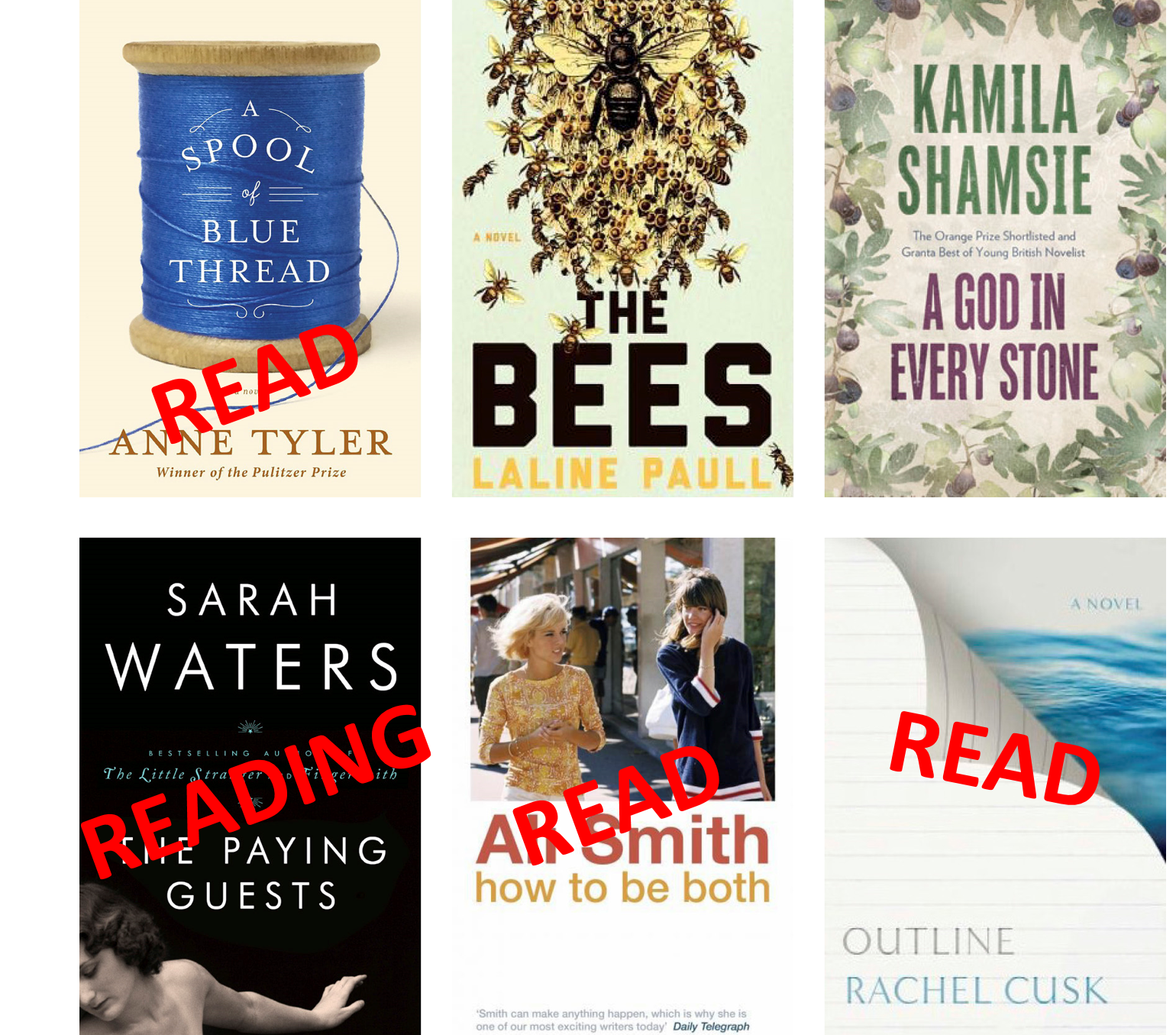
I’ve finished half of the Bailey’s Prize shortlist so far. Rather than wait until they are all completed I decided to get my thoughts down while they are still fresh in my mind. I’ve listed them below in the order I liked them. You will notice that this year’s winner is in last place so far on my list.

Outline by Rachel Cusk
Shortly before I began reading Outline, I saw somewhere online that the protagonist’s story was not told outright but rather was reflected in the stories recounted by various characters throughout the novel. Whether correct or not, I found this interpretation incredibly enlightening as I read the book. In fact I wonder what I would have thought if I hadn’t had that seed planted in my head. It is likely that I would have referred to it as a bunch of vignettes or something like that. Indeed there really isn’t one overarching plot, and the novel does appear to be a bunch of unrelated anecdotes tied together by the fact that the main character comes across each of the characters and their stories while she is in Athens to teach a seminar on writing.

We get a few bits of information about Faye along the way: she is a writer from London with kids and an ex-husband and isn’t too interested in any future romantic entanglement and a few other things here and there. More than a few reviews I have looked at focus on the notion that this is a book about story telling. How our stories outline our lives, how what we choose to put in and leave out of our personal stories is telling not just about ourselves but about the act of storytelling itself. Given that Faye is a writer teaching a writing course where we hear her students outline their own autobiographical and fictional stories, this seems like an entirely apt and satisfying way to look at Outline.

But I prefer the preconceived notion I had when I began the book. The notion that as all these other characters told their stories they were actually telling a part of Faye’s story. The stories Faye extracts from the people she encounters, regardless of the specifics, seem to be telling something about Faye’s own life and her quest for meaning as it relates to family, relationships, children, career, gender roles, etc. But the word ‘quest’ isn’t right, they are more like reflections. Each story hold’s up a mirror to Faye’s own experience. She seems like someone in a mid-life crisis who doesn’t quite know who she is or what her next step should be–or what her life has meant either to herself or to those around her.

Outline has all the introspection of an Anita Brookner novel, but rather than wandering around in the mind of the narrator, her thoughts are all provided to us through the mouths of other characters. These stories reflect a lot of loss and pain and unrealized dreams but the sum total never felt to me like a wasted or sad life. Perhaps I feel this way about Outline, because I feel this way about my own life. Not disturbed, but deeply reflective of what has brought to this point in my life and what might be next.

A Spool of Blue Thread by Anne Tyler
I haven’t read an Anne Tyler book since I read (and enjoyed) The Accidental Tourist in about 1989. Kind of nice to know Tyler is having some serious longevity and still getting shortlisted for awards, and for her 20th novel no less. The review in The Guardian, while not necessarily representative of all my feelings about the book, reminds me why professional reviewers are still important. They can articulate things much better than I can. For instance all I could think was “readable” and “straighforward” Kate Kelleway really gets it right.

The extraordinary thing about all her writing is the extent to which she makes one believe every word, deed and breath…What is most remarkable about it is the extent to which Tyler is able to relax into an ordinary, homely minor key while keeping one as absorbed as if it were one’s own family she were describing, and as if what happened to them were necessary reading. The book is no less eventful than ordinary life – and that turns out to be more than enough.

This is exactly what I liked about this book. And, although it is a multi-generation tale, it was Abby’s story I liked most. Older married woman with grown children and grandchildren and her connections she has with them and her past and the house they live in. (In fact the old family house is such an important piece of the story, I am surprised it wasn’t somehow in the title.) We are also privy to Abby’s thoughts as she begins to exhibit what seems like might be the early stages of dementia.

There are moments and emotions that I thought Tyler captured so perfectly. The kind of stuff I wanted to underline and go back to later. Many, many, things I liked about the first, and longest section of the book. One thing I didn’t quite like was the story line of the prodigal son who in my mind takes up too much of the resources of the characters and plot without really paying off in any meaningful way. But overall I found this section of the book compelling and pleasingly gut wrenching.

Then the final two sections take us back in time to fill in some back stories of long dead characters and introduces some additional complications for the living. But after the events of the first section, I didn’t want to go back in time. I wanted to stay with the issues and feelings already introduced. I love resolution in a book, but in this case I would have preferred to leave it after the first section. Of course I had to read the rest of it to know that that was the case. I don’t think many will agree with me on this point, and it wasn’t that the second two sections were bad, not by a long shot. But I think when I go back to re-read this someday to look for those passages I didn’t underline this time, I will stop at the end of the first section.

How to Be Both by Ali Smith
Much has been written about this novel, and no doubt much more will be written now that it has been chosen winner of the Bailey’s Prize. I didn’t like it at all.

I got over my dislike of the main character George (Georgia) and her way of speaking (Smith’s writing). I got over my dislike of the san serif font. I got over the fact that the pages were left-justified. I got over the lack of quotation marks to denote dialogue which required a million instances of “she says” “George says” “he says” “etc. says”. I got over all of that to get to the point where I found the story interesting and felt emotionally involved. And then we come to part two and we find ourselves in Renaissance Italy. Okay, time to switch gears. I got over all the various quotations…got over the poem-like start of the section by not worrying about understanding it…then I got over the…no. No, I didn’t get over the rest of it. I didn’t care two figs for any of the second section. I found it painful and tedious.

I can’t say that this was a gimmick in search of a story. There was plenty of depth and plenty that I might have found compelling if I hadn’t had to spend all of my time dealing with Smith’s too cool for me style.
Why didn’t Eric inspire me sooner?

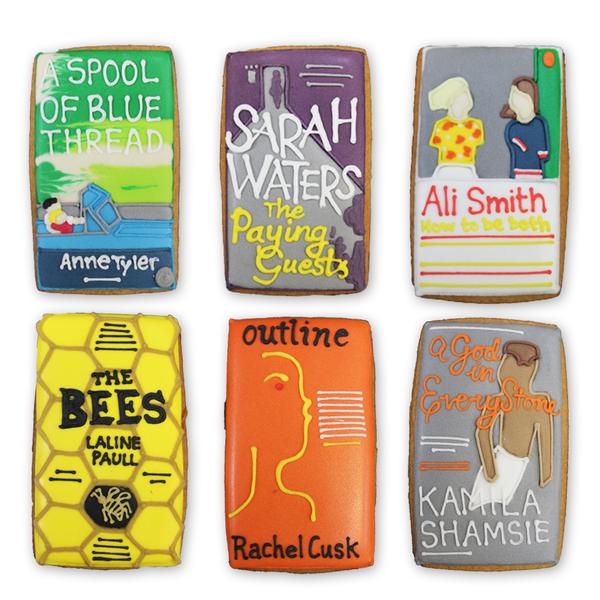
The shortlist as interpreted by Biscuiteers.com

As I close in on finishing my third of the six Bailey’s Prize shortlist I decided to take a look to see when the the winner would be announced to see if there was any way in the world I would be able to finish before the announcement. Well, it turns out the answer is no. As most of you probably know, the winner, How to Be Both by Ali Smith, was announced yesterday. If only I had been inspired by Eric’s blog post a little sooner. Then again, I doubt the duration between the announcement of the short list and the winner announcement would have been sufficiently long enough for me anyway.

The real question is how I feel knowing the prize cat is out of the bag. Since I am not even fully half way through reading the shortlist, I will reserve any judgement on the result until I have finished. I was worried that knowing the result would lessen my enthusiasm for reading the rest of the shortlist, but so far I am just as eager, perhaps even more so. I am tempted to say all kinds of things about what I have read so far, but I am going to resist.

Incidentally, Eric was part of a group that conducted their own shadow jury. They had a slightly different shortlist, but their result was the same as the official jury.