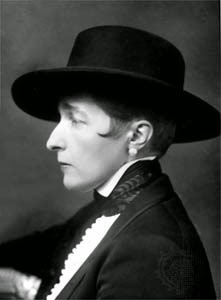
The Well of Loneliness by Radclyffe Hall
Giovanni’s Room by James Baldwin
Back in the mid-1980s when I was in high school and just getting to know the gay world no article or book about gay literature, or gays in literature failed to mention The Well of Loneliness. The only thing I remember about any of that exegesis is that TWoL is a bedrock classic of gay lit, but that it is also a depresso-tragic tale that reinforces the tragic gay stereotype. In college when the book came up in a conversation some Lesbian friends admitted they thought it was boring. Although today I have a predilection for this kind of Virago publishing-niche book, I can understand why some would find it less than compelling–or at least those who don’t have a thing for early 20th century women’s fiction. And god knows Hall could have used a better editor to fix some of her needlessly bad sentence construction. But I digress.
In terms of LGBT issues, things have changed enormously since TWoL was published in 1928, and have even changed enormously since I first heard of the book 25 years ago. Those changes definitely had an impact on how I perceived this text. For sure the Lesbian main character in the book faced great challenges and could not live an open life but she was of an economic class that allowed her much more freedom and opportunity to at least be a Lesbian. A working class woman in the same period would likely not have been so lucky.
I think one of the analyses of this book and others of its ilk is that it seems only able to present gays and Lesbians as leading tragic, depressing, or debauched lives. In my vague recollections it seems like some blame the book for setting or reinforcing that notion, and suggesting that that tragic story line was required in order to get mainstream publishers to consider printing such things. The gays had to pay for their sins somehow or the reading public would burn the place down. Indeed this may have been the case. E.M. Forster’s novel Maurice which ultimately puts a positive spin on a gay character was written 1913-1914 but didn’t get published until the 1970s after Forster was dead. I know that Forster wanted it that way, but I wonder if he would have been able to get it published back in the day without killing off Maurice and Scudder? Perhaps there are other books from that period that had happy endings for gays?
One of the ways that today’s political and social climate has changed my view of the story is that I could see the ultimate final tragedy of the book (which I won’t disclose here) as being one that didn’t necessarily have to be about being gay. I could easily see how the final pages could have played out for a straight couple in a similar way if, perhaps not, for similar reasons.
Then there is James Baldwin’s Giovanni’s Room. Written in 1956, it has similarities with TWoL in the need for a tragic end, but in many ways Baldwin’s characters are truly self loathing individuals in a way that Hall’s characters were not. Long story short, David is an American in Paris whose girlfriend/fiancee is traipsing around Spain while he falls in love with the beautiful Giovanni. Even from the relative freedom of Paris in the 1950s (I failed to mention that Hall’s book also largely takes place in Paris) society and family weigh heavy on David and cause no end of denial. So much so that even after a prolonged emotional and sexual relationship with Giovanni he seems perfectly able to pretend to himself that he is straight and sets in motion one tragedy after another. No one wins in this book.
Unlike Hall’s book I don’t think one can see this tragedy unfolding without the gay dimension. In fact their is no amount of cowardice in TWoL that comes close the David’s in GR. Happily, Baldwin, and I think to some extent Hall, led lives that were more open and fulfilling than the characters in their books.
One of the odd things about both TWoL and GR was how closely the experiences and feelings tracked with my own in the 1980s. Although things were way better in 1985 than they were in 1928, the emotional roller-coaster felt very similar. I wonder if it still feels that way for kids today.













 hogglestock