IABD: PRIZES and the Final Recap


Thanks to all of you who participated in International Anita Brookner Day. I had a lot of fun seeing what you all came up with and was gratified that so many of you had a positive experience. And I still have hope for those who weren’t instant fans. Many of the qualms that some had with the Anita Brookner novel they read and reviewed didn’t stem from Brookner’s writing ability but rather from disappointment in her characters. And therein lies my reason for hope. When I first read Brookner I was not just disappointed with ther characters I was frustrated as all get out. I mean really, who are these passive, depressed people. But I found that those people kind grew on me. I never wanted to be them, and still don’t, but I became fascinated in reading about them.  This isn’t to suggest that those of you who wrote less than positive reviews are all going to become fans, but it is to suggest that your journey with Anita may not be over.

And speaking of that journey. Anytime you post a review of a Brookner novel, just let me know and I will include it on the IABD blog and archive.

On to the prizes:

Best Review: Danilo Abacahin
He doesn’t blog, but based on this review he should. I particularly liked the way he organized his review around the reactions he had recorded in his diary while he read Undue Influence.

Best non-Review: Peta Mayer
Peta’s list of 10 Things to Expect from a Brookner Novel was insightful and funny. It confirmed some things I already thought (the walking) and made me ponder some things I hadn’t (eros).

Best Picture of a Pet Reading Brookner: Julia at Pages of Julia
Of course all of the pet pictures were cute as can be. But the one that really stood out was Julia’s. Her cute pooches are clearly Brookner fans.
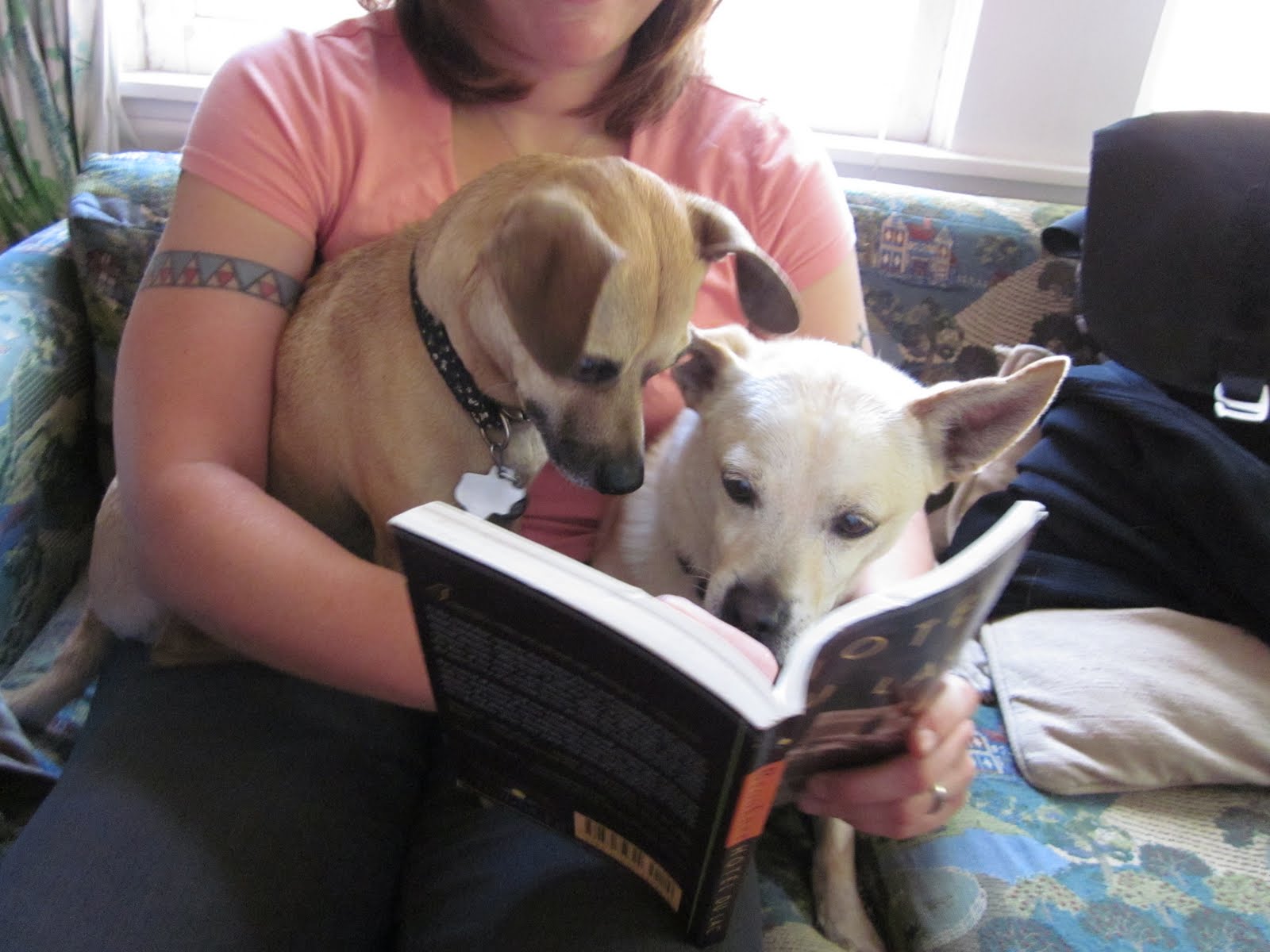
Participation Prize: Ted at Bookeywookey

Special Prize for inspring the judges to come up with another prize: Jack at The Windy Sea of Land
Simon suggested that Jack deserved a prize for starting a blog just to join in IABD. I totally agreed and so we created another prize category just for him.

Winners:
You have until August 8th to pick a paperback (any paperback, it doesn’t have to be Anita Brookner) and email me with your choice and your mailing address. onmyporch [at] hotmail [dot] com

If you are outside the US you can make your choice from The Book Depository. If you are in the US you can choose from TBD or Barnes and Noble.

The Recap
We ended up with 31 reviews of 14 novels. Did you ever see that skit on Sesame Street where everyone ended up bringing potato salad to the picnic. Well, Hotel du Lac was the potato salad of IABD.

The Bay of Angels (2001)
Michelle Foong
Wendy Mayer

A Closed Eye (1991)
Bookeywookey
My Porch

Family and Friends (1985)
The Truth About Lies

Hotel du Lac (1984)
Another Cookie Crumbles
Boston Bibliophile
Fig and Thistle
Novel Insights
Pages of Julia Blog
Savidge Reads
Stuck in a Book

Incidents in the Rue Laugier (1995)
Books and Chocolate
Erich Mayer
Roses Over a Cottage Door

Leaving Home (2005)
A Book Sanctuary
Luvvie’s Musings

Lewis Percy (1989)
Bibliolathas

Look at Me (1983)
Nonsuch Book
Savidge Reads

The Next Big Thing (2002)
Luvvie’s Musings

A Private View (1994)
This Windy Sea of Land

Providence (1982)
My Porch

The Rules of Engagement (2003)
Gaskella
Park Benches & Bookends
Silencing the Bell
Telecommuter Talk

A Start in Life (1981)
Citizen Reader
My Porch
Savidge Reads

Undue Influence (1999)
Danilo Abacahin
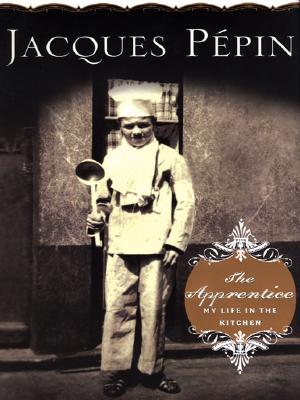
Book Review: The Apprentice by Jacques Pepin


Something about foodie memoirs makes me devour them almost as fast as I can devour a sheet cake or box of Little Debbies. Julia Child’s My Life in France, any of Ruth Reichl’s books, and now Jacques Pepin. I know what you are thinking, how dare I mention these food luminaries in the same paragraph as sheet cake and Little Debbie. I am nothing if not a man of contradictions. I am quite a good home cook and home baker and I have a pretty sophisticated palate. But darn if I don’t like me some low cost sugar and shortening. And did I ever tell you about the time I ate brownies out of the garbage? It was years before Miranda did it on Sex in the City.

But back to M Pepin. Unlike Julia Child, I didn’t really know any of Pepin’s story until I read this memoir. I am not even sure when I first became aware of him and I really didn’t know how he came to prominence. Now I do, and his story surprises me more than a little. He started out his apprenticeship at the age of 13 after pleading with his parents to let him leave school so he follow his passion for food. Since his restauranteur mother got him into the kitchen in the first place, it didn’t take too much to convince his parents. It is these early years of Pepin’s story that I most liked. After proving himself in various capacities, making his way around the kitchens of Lyon and then Paris Pepin is less than excited when he is drafted into the French military while that country was at war in Algeria. Instead of heading off to the war zone, Pepin ends up as chef to the Prime Minister of France.

Throughout the memoir are many wonderful descriptions of food and wine that can make the reader hungry.

The most surprising (and least interesting to me) parts of Pepin’s career happened after he came to America. Perhaps most startling to me was that fact that Pepin worked for years in the test kitchens at Howard Johnsons working with another French chef to improve the quality of the restaurant chain’s food. Apparently HoJo’s back in the day isn’t what we may think of it today. Still he did many other things cookbooks, consulting, teaching, TV, etc. Still quite interesting, I just found it less interesting than his earlier years in France.

If you like food writing you will probably like this one. I know I am going to try at least one of the recipes included. But, if you haven’t already, read Childs’ My Life in France or Ruth Reichl’s books instead.

Book Review Exiles in the Garden by Ward Just


Photographer Alec Malone does not follow his long-term Senator-father into politics and turns down the “opportunity” to be a war photographer in Vietnam. Is this something he will live to regret?

Alec’s Swiss-Czech wife Lucia isn’t sure Washington is the place for her. She takes comfort and finds intellectual stimulation in the company of her Eastern European emigre neighbors and their frequent garden parties (literally exiles in the garden). Will this be enough for her?

Alec’s 90-something Senator-father is beginning his final decline. Will Alec get closure?

Lucia has never me her long-dead father. Will Lucia get closure?

Ward Just is the master of writing smart novels about the world of politics and the world around politics. His characters are often near the very heart of power, and just as often they are the types who like to fix things behind the scenes. Of his books set in Washington, they all evoke a time when members of Congress didn’t fly home every weekend and actually set down roots in Washington.  Many politicians today still do set done roots, but are forced into pretending like they have, often disparaging Washington so that the folks back home don’t think they are out of touch with local rage.*

But Exiles in the Garden is little to do with U.S. domestic politics and much more to do with the alienation and displacement, and international and intranational conflict and violence. But it is also about Alec’s quest for…hmm for what? There is something about this book that makes it difficulty for me to see the connection between Alec’s issues and the whole exile angle. Perhaps there is not meant to be that much of a connection. But then to me it just feels a bit episodic. I thoroughly enjoyed the episodes, Ward Just is a wonderful author**, but I didn’t quite get how it was all supposed to hang together.

For anyone interested in the world of old-school politics and its air of noble expedience and corruption you really can’t go wrong with Ward Just. I just wouldn’t start with this one.

*On a  little side note–although it is related– I need to rant for one second. Back in the 2008 presidential elections Sarah Palin often made comments about how she would bring more small town America to Washington. She often used comments like these to bait her base by taking a poke at the East Coast, politicians, and intellectuals. (Amazing how politicians like to act like they aren’t politicians.) My thought then, and my thought now, is that Congress has hundreds of members from small towns across America. In fact Congress is nothing if not dripping with small town baseball, mom, apple pie, etc. I think that part of the problem in Congress and Washington in general is that too much time, effort, and legislation goes into protecting, not small town values (hard work, honesty, etc.), but rather those less noble parochial concerns that may be good for a specific Congressional district but aren’t good for the country as a whole.

**A former journalist with the Washington Post, Just is usually pretty accurate with his details, but I ran into a few that made me wonder if he is slacking off a bit these days.  The first thing that made me wonder was that he wrote about tour buses at the Treasury building. This doesn’t ring true unless they did make stops there at one time or it was to drop folks off for the nearby White House. But you just don’t hear about or see tourists making a beeline for the Treasury. The Bureau of Engraving at the other end of 14th Street, maybe. But Treasury?  Still, I was able to over look this. There may be something I don’t know. But then he writes about a character’s radical parents who live on the Iron Range in northern Minnesota who “were forever plotting the overthrow of the government in Minneapolis…” You don’t have to be a Minnesotan to know that the seat of the state government is in St. Paul, not Minneapolis. And someone as poltically astute as Just should know that unless you are talking about municipal policy, Minneapolis is about business not politics. It seems like a small point, but such a basic mistake kind of makes one wonder what else he might be getting wrong. This is not something I expect from Just.

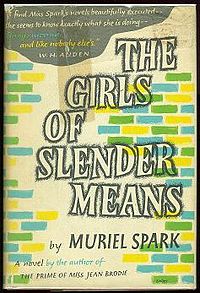
Book Review: The Girls of Slender Means by Muriel Spark


I wish I had this edition.

Long ago in 1945 all the nice people in England were poor…[A]t least that was a general axiom, the best of the rich being poor in spirit.

It’s kind of funny that Muriel Spark, from the vantage point of 1963, regarded 1945 as “long ago”. I suppose it says a lot about how much the state of the nation changed from the immediate aftermath of World War II to the swinging sixties. This must have been especially true for the women who lived at the May of Teck Club. Would it even still have existed in 1963? From its rules of governance:

The May of Teck Club exists for the Pecuniary Convenience and Social Protection of Ladies of Slender Means below the age of Thirty Years, who are obliged to reside apart from their Families in order to follow an Occupation in London.

Many of the women who live at the club, while they may hold a job in London, are clearly biding their time (and playing the field) until they get married. Like a school or any other physically close community, the women self-segregate according to their inclinations and aspirations. At The May of Teck Club the segregation plays out floor by floor.

[On the third floor] there seemed to have congregated, by instinctive consent, most of the celibates, the old maids of settled character and various ages, those who had decided on a spinster’s life, and those who would one day do so but had not yet discerned the fact for themselves.

I find the last phrase particularly humorous. It’s kind of the same for young gays. Many of us sought out like-minded individuals without really knowing what we were seeking out or why.

I have a long standing penchant for the work of Muriel Spark, and the subject of this one is clearly something I appreciate, but when I first picked this up I read to about page 50 (of 141) before realizing that I hadn’t really taken any of it in. For some reason I was distracted and wasn’t really paying attention. When I picked it up some weeks later I was tempted to just continue on where I left off. Instead I went back and started from the beginning. All the main points of the narrative were familiar to me, but the amount of important, interesting, and funny detail that I had missed on the first go around was astonishing. One of the things that went completely over my head the first time was the frequency of the narrative shifts. There is nothing confusing about these shifts, I was just distracted.

As for the book itself. It is typical Spark. That is to say it is brilliant. Spark is the master of finding the subversive side and in many cases even the dark underbelly, of some of the most conventional characters and situations. I know there is a growing fan club of Spark fans out there. You really ought to add yourself to the ranks.
  

Book Review: State of Wonder by Ann Patchett


Regular readers will know that I rarely read and review current fiction. I have a strong contrarian streak that makes me shy away from anything getting too much attention. Yet with all of the online hoopla about Ann Patchett’s latest book I find myself in the “me too” crowd. Back in late 2000 my friend Earl handed me a copy of Bel Canto. Since Earl and I were music buddies, he rightly guessed that I would enjoy Patchett’s drama with a world-class soprano as protagonist. Once I finished Bel Canto, I went out and found all of Patchett’s other books and enjoyed them all to varying degrees.

There are two things that impress me about Patchett. The first is that I love her prose style. It is intelligent but very accessible. And it always feels right to me. Nothing seems forced. In contrast, I once listened to a radio interview with Patchett and found her to be pretentious in a way that her writing is not. (I still enjoyed the interview, but found her a little stagey–like she was playing the role of author. I think it may have been too many years hanging out with her friends from the Iowa Writing Workshop.)

The other thing that really impresses me about Patchett is her ability to write about worlds that she doesn’t inhabit. Although I love a book with a struggling writer, I am impressed by authors who steer clear of that formulation. And Patchett does it in spades. Her lastest creation is a group of drug researchers along the Amazon. There were moments in their travels up the river that made me think of Heart of Darkness, but I think that comparison doesn’t extend too deeply beyond the superficial similarity of a journey up a river into a jungle.

Having adequately sung the praises of Ms Patchett, I must say that State of Wonder didn’t feel as well thought out as her other novels. There were many provactive things that made me think (in a good, what does this say about humanity kind of way), but there were also moments that challenged me to maintain my suspension of disbelief. In no way do I think it a bad book, for me there were parts that didn’t hang together.

One paragraph of spoilers: Marina’s medical mistake was horrific, both physically and psychologically. How do doctors deal with their unavoidable mistakes? That is a head trip I am glad I don’t have to deal with. Didn’t it rip your heart out when Marina handed Easter over to the tribe? It shouldn’t have, he was misappropriated by Dr. Swenson in the first place, and naturally belonged among his tribe. And the genuine affection and the aspirations of both Anders and Marina for Easter were mired in first world paternalism as Dr. Swenson points out. But…yet…it just killed me when she handed him over. Not that he necessarily shunted off to his doom, but the incomprehension and loss that the deaf boy must have felt at that moment just killed me. And what does it say that Easter’s life is up for grabs as long as it saves Anders?

No more spoilers.

This would make a great book club book for reasons that are clear in my spoilers paragraph. So for those of you that haven’t read it, maybe it is time you did. Or if this one doesn’t sound like your thing, you really should go find some Patchett and read it.

Six Degrees of Kevin Bacon

  
In the lead up to IABD I was making all kinds of tenuous connections between my posts and Anita Brookner. After reading Peta’s much deeper analysis of connections between Brideshead Revisited and Anita Brookner, I  began thinking about the Six Degrees of Kevin Bacon game.

Are you familiar with the Six Degrees of Kevin Bacon game? To play, all you have to do is link any celebrity to Kevin Bacon within six degrees. I read an article years ago in The New Yorker that posited that this game works with Kevin Bacon because he has been in such a variety of projects and had not been typecast. The article stated that someone who made many more films and was far more famous, like John Wayne, won’t necessarily fare as well in the Six Degrees game because their were work was more specialized.

So I thought how many degrees of separation between Kevin Bacon and Anita Brookner. Using Diana Quick from the Brideshead post as a possible starting point, it was far easier than I thought it would  be to connect these two dots. I bet there are other connections as well. Perhaps this will be a regular feature.

Kevin Bacon

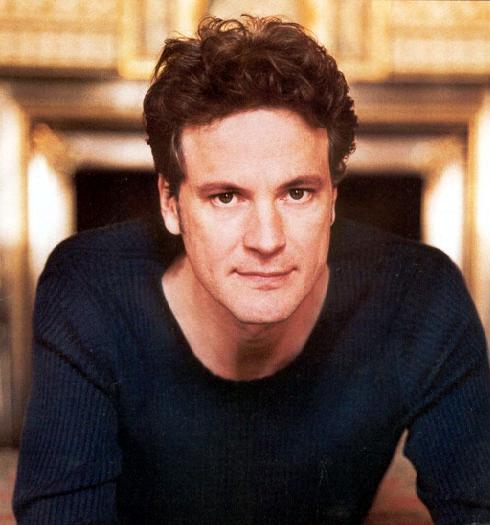
Was in Where the Truth Lies with Colin Firth

Who was in (the sappy) Love Actually with Bill Nighy

Who was in a 27-year relationship with Diana Quick

Who voiced an audiobook of Anita Brookner’s Undue Influence

 That’s only 5 degrees of separation. Can you do better?

Happy International Anita Brookner Day

    
Just like New Year’s Eve, Anita Brookner’s Birthday and IABD have arrived in most of the world ahead of us here in the U.S.

First off Happy Birthday to Ms Brookner. I wonder what she has planned for the day. Describing that could have been one of the contests for the day. And I suppose you still could since there is a prize for best non-review post.
Second, I hope the rest of you enjoy IABD. The reviews are coming in from all over and are being posted on the IABD blog as I get them. If you have posted one, or have one to post, please make sure you let me know about it.

Third, here is my entry for pictures of pets reading Anita Brookner. It’s a good thing I don’t qualify for the prize being an organizer, because my picture is not all that good. Lucy seemed more interested in the foot traffic on the sidewalk than she was in the book.  I will post other pet pictures on Sunday.


That’s Lucy not reading Providence.


Book Review: Providence by Anita Brookner

Never before have I re-read a novel so soon after the original read. But since I am re-reading all of Brookner’s novels in chronological order, Providence was the next one in the pile—even though I read it for the first time just over a year ago. Even more unusual for me is to write another review for the same book without just saying “ditto”. But second reads give us so much more to think about, so this won’t be too challenging. Right?

Kitty Maule is a lecturer whose specialty is the Romantic tradition. Her unrequited love for her colleague Maurice sets up a cognitive dissonance between the independence and drive that helped propel her career, with the urge to set it all aside for the privilege of being Maurice’s wife. In her professional life, Kitty leads three students through a close reading of the novel Adolphe written in 1806 by Benjamin Constant. The “action” in Providence includes classroom discussions of Adolphe and the Romantic tradition which are easy enough to take in without knowing anything, or much, about either. But, as Providence would have it, just as I was finishing up my re-read of Providence I got my delivery of the 37 novellas that make up The Art of the Novella series from Melville House Publishing. And amongst those 37 volumes was none other than Adolphe by Benjamin Constant. And even though I was meant to save these novellas for August when I will be participating in TAOTN challenge, how could I not read Adolphe now to better round out my experience of Providence? (Does this count as wading into comparative literature?)

Adolphe can be easily (and crudely) summarized thusly: For the first third of the book Adolphe seeks to win over the love of Ellénore. He spends the final two thirds trying to break up with her.

At first glance the two works have a few things in common. Both Kitty and Adolphe are seemingly ruled by reason and calculation yet both find themselves subject to swings of passion that cancel out much of their rational thinking. Kitty’s classroom explanation of Adolphe’s behavior could just as easily be applied to Kitty:

‘…it is characteristic of the Romantic to reason endlessly in unbearable situations, and yet to remain bound by such situations…For the romantic, the power of reason no longer operates. Or rather, it operates, but it cannot bring about change.’

And both Brookner and Constant use language that is rather staid compared to the turmoil it describes. Again, Kitty’s exegesis on Constant could apply as easily to Brookner:

…the potency of this particular story comes from the juxtaposition of extremely dry language and extremely heated, almost uncontrollable sentiments…[T]here is a feeling that it is almost kept under lock and key, that even if the despair is total, the control remains.

And there is more than a little connection between the two works in the fact that Kitty’s behavior towards Maurice is a more modern, less dramatic version of the theme that Kitty abhors in Adolphe. It is only for the sake of studying the juxtaposition of classicism and Romanticism that Kitty overlooks:

…its terribly enfeebling message: that a man gets tired of a woman if she sacrifices everything for him, that such a woman will eventually die of her failure, and that the man will be poisoned by remorse for the rest of his life.

Of course the modern twist means that Kitty doesn’t get to die of a broken heart, and Maurice, most certainly feels no remorse.

So what then of Providence in both Providence and Adolphe? In Brookner’s novel, the idea plays out in Maurice’s belief in Providence as well as in Kitty’s conflict between her non-belief and her flirtation with that which is outside her control. What else could explain her visits to a fortune teller and her reluctance to accept the reality of her relationship with Maurice? But I think the more interesting aspect of Providence and the one that plays out in both Providence and Adolphe, is in how the objects of female desire, Maurice and Adolphe, play the parts of Gods. Not in the sense of being the objects of worship or adoration (although there is an element of that). But rather they both usurp the role of the guiding hand in the way they actively manipulate the desire of Kitty and Ellénore, and indeed control their destinies. One could argue that it is still Providence at work but really it seems more to me like they are being toyed with by self-centered men. In the case of Adolphe his motivation seems to be purely ego and boredom. With Maurice you can add to that the fact that he wants a hot meal every now and again.

After re-reading the passages in Providence that dealt with Adolphe explicitly I couldn’t help but think that the title of Brookner’s book could have been Alienation. Through the lens of Kitty’s discussion of Adolphe’s feelings of alienation, it struck me that Kitty’s big problem was less to do with Providence and more to do with her utter sense of alienation. Alienated from her colleagues, her country, her ethnicity, her aging grandparents, her dead mother, her father who died in the war without ever knowing his daughter, and even from the fashion of the times. In the end, her academic career, perhaps the thing that most alienates her from all the rest, is the only thing she has to hold on to.

You know I love a list (the Brookner Edition)


No doubt this badge does not refer to British
fiction writers. Until now.

Anyone who knows anything about me knows that I love a list. While poking around on the Googles looking for interesting bits about Anita Brookner I came across this list from The Sunday Times published in 2008.  Naturally AB makes the cut. I have noted the ones that I have read.

The Sunday Times 50 Greatest British Writers Since 1945

1. Philip Larkin
2. George Orwell read
3. William Golding read
4. Ted Hughes
5. Doris Lessing read
6. J. R. R. Tolkien
7. V. S. Naipaul read
8. Muriel Spark read
9. Kingsley Amis almost read
10. Angela Carter
11. C. S. Lewis read
12. Iris Murdoch read
13. Salman Rushdie mean to read
14. Ian Fleming
15. Jan Morris
16. Roald Dahl
17. Anthony Burgess
18. Mervyn Peake
19. Martin Amis read
20. Anthony Powell will read
21. Alan Sillitoe
22. John Le Carré tried to read
23. Penelope Fitzgerald read
24. Philippa Pearce
25. Barbara Pym read
26. Beryl Bainbridge tried to and still mean to read
27. J. G. Ballard
28. Alan Garner
29. Alasdair Gray
30. John Fowles
31. Derek Walcott
32. Kazuo Ishiguro read
33. Anita Brookner read
34. A. S. Byatt
35. Ian McEwan read
36. Geoffrey Hill
37. Hanif Kureishi
38. Iain Banks read
39. George Mackay Brown
40. A. J. P. Taylor read
41. Isaiah Berlin read
42. J. K. Rowling read
43. Philip Pullman
44. Julian Barnes read
45. Colin Thubron
46. Bruce Chatwin read
47. Alice Oswald
48. Benjamin Zephaniah
49. Rosemary Sutcliff
50. Michael Moorcock

Of the ones I haven’t already read, which authors do I really need to read?
  

Photo Quiz (the Brookner Edition)

   
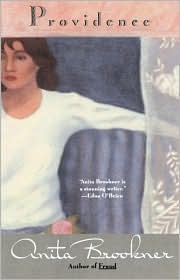
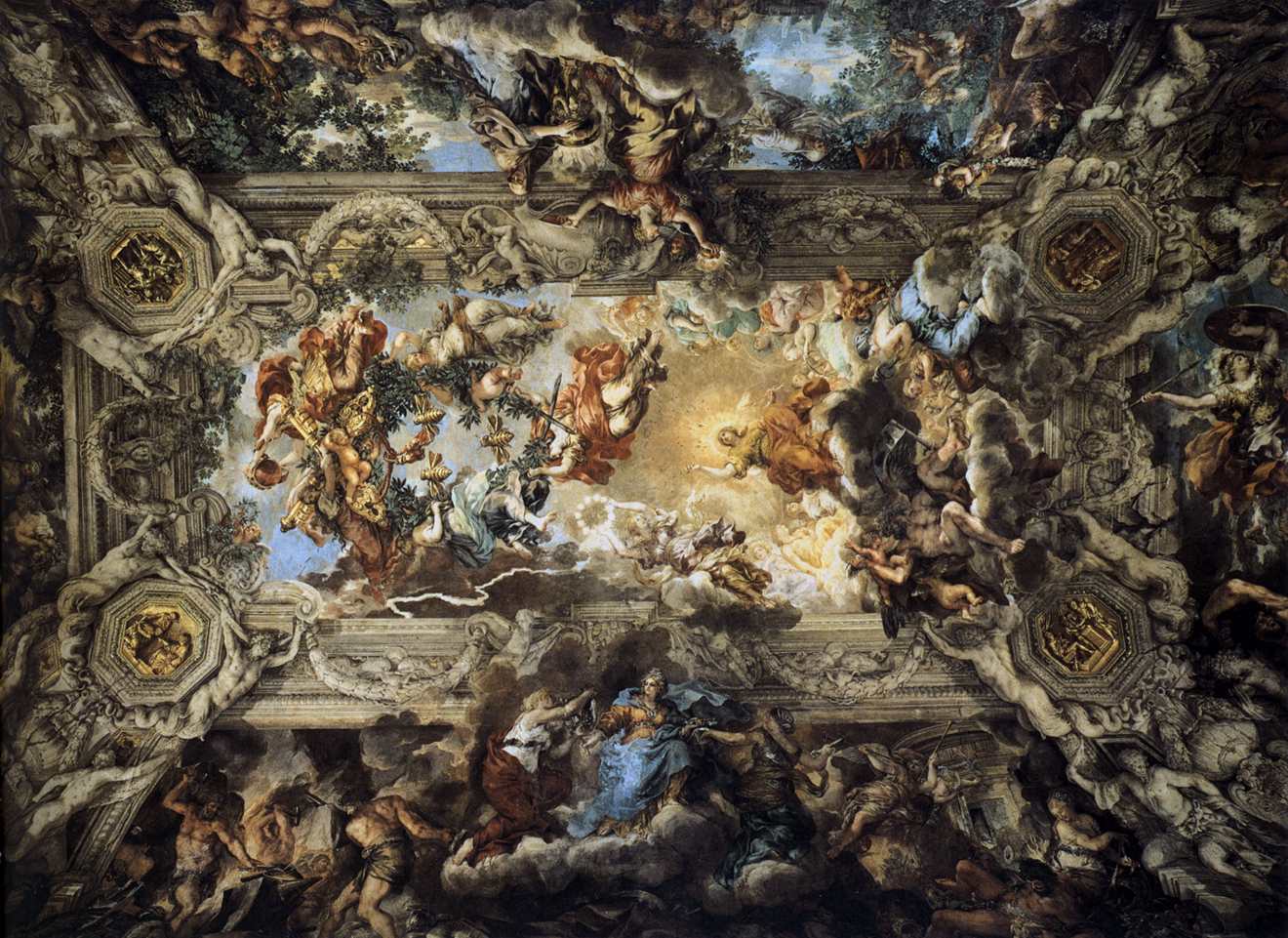
Based on these two photos, can you tell which novel I am going to review tomorrow? Since you were all so good at my last photo contest. I give no hints this time. In fact, in order to actually win, you not only have to get the book title right but you have to tell me the name of the artist who created the fresco in the second photo. The winner gets to order their paperback of choice from The Book Depository.

The big day is right around the corner and the reviews are piling up over at IABD, most recently from Luvvie’s Musings. So far we have 14 reviews available. And we can’t wait to add yours to the official IABD review archive.