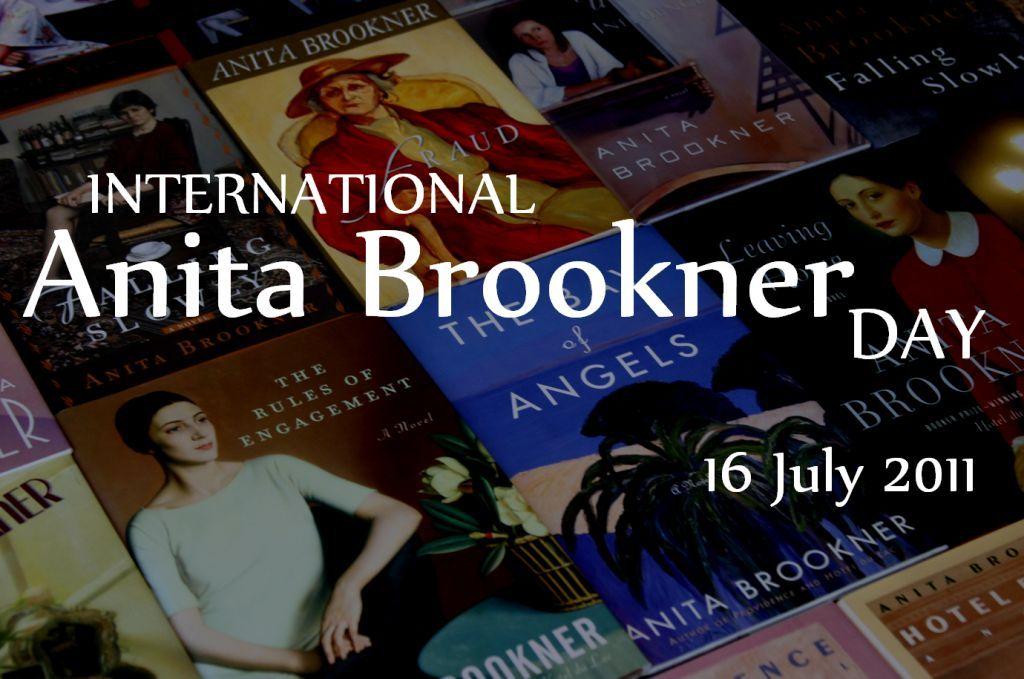
IABD: I know you can read 200 pages in 16 days


For most of us reading 200 pages is like a walk in the park. We aren’t like those sad people who only manage to read a book a year.

So, there is nothing (and I mean nothing) to keep you from participating in International Anita Brookner Day:

  • I don’t think any of her 24 novels are over 200 pages. If they are over 200, it can’t be by much.
  • Her books are pretty darn easy to find in second hand shops and in libraries.
  • You have 16 whole days to read one and then write something about it in time for Brookner’s 83rd birthday on July 16–and in this, the year that marks her 30 years of writing ficiton.

And here is food for thought:

  • I know Brookner will not be everyone’s cup of tea, but I have been amazed by some of the reactions I have gotten so far. One blogger wrote to tell me that she meant to sit down and read 20 pages in her first attempt to read a Brookner novel. Instead she had to pull herself away from it 130 pages later so she could eat something.
  • Perhaps even more amazingly, another blogger tried one Brookner novel and couldn’t finish it. But then, somewhat reluctantly tried another one some weeks later and ended up loving it (hope I didn’t put that too strongly). 
  • And then there is the blogger who reads mainly non-fiction who took IABD as a reason to read her first Brookner and she was very glad she did.

So what are you waiting for? Sixteen whole days to read 200 pages.

There are prizes!

You can include your pet!

There are almost no rules!

You don’t have to be a blogger!

Be a part of Internet history! There is a dedicated website where your review, pet photo, or other Brookner-related posting will live on in perpetuity (or at least until Blogger ceases to exist). It will be the most comprehensive place on the web for blogger and blog reader reviews of Brookner’s novels.

And if you have a blog, this is a perfect time for you to exhort your readers to be part of the fun.

What’s wrong with this picture?

  
We all love a good library picture. And I am guessing I am not the only one who likes scanning pictures of bookshelves in magazines to see if there is anything interesting. Usually one can’t see many of the spines clearly but yet we no doubt see a few that we recognize by color/size/design even without being able to read the titles.

And then along comes this picture. I tore it out of a magazine quite a while ago so I don’t remember where it came from. You would think that with so many books visible I would have fun combing the stacks as it were. But it doesn’t take long to realize this is not a library worth browsing. At least not to me. In the first place the picture is staged, and poorly staged at that. Those piles do not look the least bit organic. In the second place, and this is the important part, there are so few books shown that I would even consider reading, that there might as well not be any books in the picture.

I can see a few that would keep me from getting entirely bored. The Sherlock Holmes boxed set in the foreground and the Jon Stewart book on the topo shelf.  In a pinch I might pick up the two Harry Potters in the collection. I would probably scan the Suze Ourman book because I love reading about saving money, but I sure wouldn’t pick up the Wally Lamb, Bridget Jones or Smilla’s Sense of Snow again. None of them warrant a re-read. And while Empire Falls is a good book, I was a little bored by it and didn’t finish it.  So after that, what are you left with? Tons of Patterson, Steele, Brown, Baldacci and Grisham.

Has this ever happened to you: you see a full boookcase and think “oh fun”. But as soon as you scratch the surface you realize it is all crap?

If you want a closer look at the boring books
click the picture to make it larger.

IABD: Faulty Memory

Florence taken by jgcastro on Flickr
He has lots of other great shots of Italy

 
There appears to be a gap between the way I remember first encountering Anita Brookner and the way it actually happened. The mythology that I have built up around my first meeting with the work of Ms Brookner is that I came across her novel Altered States on a bookshelf in my bedroom in a cheap but charming pensione near the Palazzo Pitti in Florence in October 1998. I remember it clearly because my friend Kevin who had never been to Europe before thought I was stealing the book, whereas I was operating on the international traveller’s principal of take one leave one. (Although, in retrospect perhaps I did steal it. I just consulted my Books Read list for that time period and there is no way I had any of those books with me, let along left any of them behind. Unless maybe I left a book that I didn’t finish reading, but that doesn’t seem likely either. I guess I need to find that pensione again and replace the paperback I stole 13 years ago.

Lest you think I am a liar as well as a book stealer, I should note that the above did indeed happen. What is incorrect about this supposedly clear memory of my first Brookner, is that this stolen novel wasn’t actually my first Brookner. I had actually read her novel A Friend From England in May of that year.

So why the faulty memory? Who knows. As I sat and puzzled it out tonight it occurred to me that rather than stumble across my first Brookner in Florence, I no doubt picked up my first Brookner A Friend from England at a used book store in Minneapolis because it had the word “England” in the title. My reading choices were pretty haphazard back in those days and I certainly didn’t have a good handle on how to effectively slake my thirst for all things English so I needed such obvious cues to help me along. And I suppose that I had visions of what a book with the word England in the title should be like, and while Anita Brookner may be very English, it wasn’t quite what I was expecting.

Part of the memory of my first Brookner novel was that I had a love/hate relationship with it. I remember thinking it so depressing and dreadful but also somehow compelling and enjoyable. But my overall impression was “no thank you, I don’t need to read her again.” But then of course something did indeed make me read her again. And once you get Anita Brookner, you get Anita Brookner. And that book from the pensione in Florence, although my second not my first Brookner, was the one that convinced me that I got Anita Brookner. And within a year of that second Brookner I read four more of her novels and continued on into the new century reading her back list with some speed.

So Florence may not be the city where I first met Anita Brookner, but it is certainly where I first began to appreciate her. Do you have any memories that you have a hunch may not be accurate?

Book Radio


When we bought our car in 2005 we had Sirius satellite radio installed. We bought the life-time membership which is a good thing, because I don’t think we ever would have kept paying the monthly fee after we had actually used the service.

We don’t spend enough time in the car (thankfully) to really make such a service worth it. Add on top of that the fact that the sound quality is really quite bad. Most of the talk stations sound like AM radio in a tin can. The music stations are better but not as good as broadcast FM stations. I know it is not the stereo system in the car or the speakers because regular FM radio and the iPod sound brilliant.

But then there is all the variety. John heads straight for the 70s or 80s whenever he has control of the dial. That can be fun, but I like to explore the less mainstream options like the CBC and the BBC. I find the CBC in particular to be quite fascinating. For some reason it seems so much more foreign to me than the BBC. Maybe because it is more Canada-focused whereas the BBC is more global in its approach.

Of course I do remember the halcyon days of living within reach of Minnesota Public Radio, which is, in my humble opinion, the best public radio network in the country without question. One station devoted entirely to classical music and one to news and information. Back in the 1990s, before satellite radio and the Internet, MPR would broadcast both the CBC every night and the BBC World Service. (I was in college at the time and didn’t have cable TV either.) To have these two exotic streams of information every night was a revelation and it made me feel so smart and cosmopolitan. And I think it really appealed to my nascent wanderlust inclinations. (I’m having a seriously groovy moment right now thinking of those days. Sigh.)

Oh  yeah, the title says Book Radio. Maybe I should get to that part.

The other day I was in the car trying to avoid listening to the news and not caring for the insipid, pedestrian, overplayed, classical music chestnut that was on broadcast radio, I flipped over to the Book channel on satellite. Despite the tinny audio quality I was immediately enchanted by the book. Which is odd for me because I don’t really do audio books. But there it was: English accent, check. Cosy theme, check. But then it suddenly stopped. I guess it was time for them to change programs but the abrupt stop was, well, abrupt. To make matters worse, they didn’t even follow it up with “You’ve been listening to…” Oh yes, they eventually did, but all they said was “You’ve been listening to the Penguin Book Hour” or something like that. Yes?! And what else?! What is the BOOK being read, you idiot?! And then they played all these loud, promos for other Sirius stations.

Okay, Thomas, don’t panic. Google will save the day, just pop in some of the key words that you heard in the text…

“club lunch”–so many guests arriving at various times that lunch would be serve yourself

…his inkwell was dry which made (some woman’s name) wonder what else in the house wasn’t up to scratch…

Cardiff Castle…

Ulrich

Oh god, not even Google is going to help this time. The main problem is I didn’t know how to spell Ulrich, wasn’t even sure I heard it correctly. But I was wrong, Google is amazing. With that little information it actually did find the right book. (I had, surprisingly, already found out the book name on Sirius’ website where they actually had a detailed program schedule. But I still did the Google test and was still surprised that it found the right info.)

Turns out the book was Fall of Giants by Ken Follett. I have never read any of his books and have been turned off by the double whammy or their immense size and the fact that they tend to be popular. But after hearing this bit of the book, I may actually pick this one up.

I used a foreign language
edition image because
all of the English ones
are ugly and are the type
of covers that make me
not want to red Follett.
I am a book snob,
no doubt about it.

So back to Book Radio. Like all things on Sirius it generally sucks. I think they have some original programming, but most of the schedule appears to be simply them playing existing audio books. No intelligent chatter, just canned announcements and promos between audio books that don’t really give much information. Plus the choice of books and flashy razzmatazz of the promos are meant to appeal to a reading public that is somewhat, shall we say, more mainstream than my own tastes.

Like cable TV, there is so much potential for cultural programming. But instead it gets dumbed down to be almost as banal as everything else. Too bad I can’t read and drive at the same time. Then again I have only listened to about 6 minutes of Book Radio, maybe I will give it another chance on the drive up to Maine this summer.

[Since writing this post we travelled down to Richmond, Virginia for a wedding and I listened to more Book Radio. My estimation of it improved slightly but only slightly. They played Gaskell’s North and South but then also seem to have a regular show on comic books. Not graphic novels mind you, but comic books.]

Seen on the Subway

     
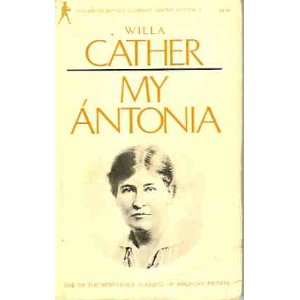
My Antonia by Willa Cather
The Reader: Forty something petite Chinese woman wearing a rather chic black cotton shirt-dress with black flats and a clear, see through backpack.
The Book: Everything Cather writes is pretty brilliant but this is definitely one of her major works and rightly so. Life on the prairie was never more compelling and touching.
The Verdict: I have read it before and I know I will read it again.
Story and Structure by Laurence Perrine
The Reader: Forty something balding white guy with dark grey suit, pink shirt, and a bow tie that had yet to be tied.
The Book: Apparently this is an all-time bestselling introduction to literature. Certainly falls into the text book category, the prices certainly reflect the extortionate nature of text book pricing. The edition being read by the man on the train was $77.00 on Amazon. Yikes.
The Verdict: When I first saw this book I just assumed it was some kind of theory book about some field. Didn’t realize, despite its title, that it might be about literature. But even then I probably would have thought that it was on the theoretical side. But the description of the book on Amazon makes it sound like a pretty straight forward intro to the study of literature. I might actually keep my eye out for this one. Having had no post-high school course on lit, I could use the assistance.
Ender’s Game by Orson Scott Card
The Reader: A cute-as-a-button little boy, maybe about 10 years old wearing a soccer camp t-shirt (most likely on his way to soccer camp) and shorts. And because he was a little kid it was easy to see the title as he had it propped up on his lap as kids will do with books. Good eyesight I guess. He was with dad who was reading something on an iPad, and his grandmother  who had some kind of hardcover bestseller mystery from the library. Clearly the family that reads together, stays together.
The Book: Normally I would not feature this kind of book. But the little boy was so intent on reading it despite the early hour and the fact that every other kid seems to be playing some sort of electronic game. “This twenty-five-year-old science fiction classic has been repackaged for younger readers. Unlike many hard-core science fiction titles, this book is particularly appropriate for a younger audience, for its protagonist, Ender Wiggin, is just six years old at the novel’s beginning and still a pre-teen at its end.”

The Verdict: I will not be reading this book.


It’s been 5 years!

    
It just occurred to me that it has been five years since I started blogging. In fact, my five-year blogiversary was last week. I completely stumbled into starting My Porch in the first place. After filling in my information when I was making a comment on another blog, Blogger asked me if I wanted to start my own blog. And then I just walked through the very easy steps to do so and the rest is history. 

You will notice from my inaugural post (reposted below) that my blogging interests were pretty broad when I first started. Although I always wrote about books it wasn’t until late 2008 that I really started to focus on books. I did so not only because that is what interested me most, but because all of you showed up and started engaging me in a very satisfying way.

My original post is a little pompous but not entirely unrelated to how I conduct my blog five years later.

The Inaugural Post from June 14, 2006


In thinking about the kind of online discussion I wanted to initiate, I kept coming back to the idea of a place where people would engage each other. A place that would serve as an antidote to banal office conversation and the anonymous interactions that characterize most of our lives. Despite the absence of a physical location, the internet has done more to connect people with each other than anything else since television and suburban sprawl first disconnected us back in the 20th century. Sprinkled among the wasteland of post-World War II development, one can still find places like this–town squares, corner stores, and front porches–they just don’t get used much anymore.

Although I may end up ranting and raving from time to time, I want My Porch to be a place where the basis for every discussion is respect. I want us to disagree and argue like mad, but to remember above all that we are neighbors and have to live with each other. (Assuming someone other than me actually reads this…)

Topics of particular interest to me that will be featured in posts to come include, politics, urban planning, travel, TV (the great and the trashy), classical music, art, books, and about a million other things.

I take my inspiration from Samuel Barber’s (1910-1981) nostalgically beautiful Knoxville Summer of 1915.

“…It has become that time of evening when people sit on their porches, rocking gently and talking gently and watching the street and the standing up into their sphere of possession of the trees, of birds’ hung havens, hangars. People go by; things go by…”

Based on the opening section of James Agee’s A Death in the Family (which I haven’t read), Barber’s piece for soprano and orchestra opens in a rather peaceful, lilting way that never fails to remind me of some happy, yet undefined and fleeting moment from my childhood in small town Minnesota. A feeling rekindled during my graduate school sojourn in Ithaca, New York from 2000-2002. You know the feeling, one of those summer evenings at twilight with warm gentle breezes and crickets.

If you think I am living in a fantasy world you are partly right. It is a fantasy about living in a place where people care for other people and the world around them, and live honest, positive, engaged lives. It might actually be a great place. Let’s give it a whirl.

Would I like Mary Wesley?

   
I noticed over at Time’s Flow Stemmed this morning that there is a website where you can plug in an author’s name and it will map out other authors who are similar. The closer together two authors are, the more similar they are–supposedly. I first put in Margaret Atwood, it had pretty much every big Canadian author you can think of (Laurence, Davies, Findley, Shields, Hoffman, etc.) which I found kind of dubious.  But then I noticed Margaret Drabble (an author I quite like) and clicked on her which took me to a map centered around Drabble. From there I clicked on Anita Brookner. While I like many of the authors who showed up closest to Brookner I couldn’t particularly figure out what their similarities might be. But that may be my fault, after all if a bunch of my favorite authors show up in a clump they must have something in common. Although I kind of fear that ‘English lady’ might be the common denominator.

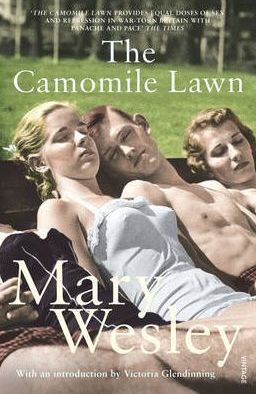
One of the closest names to Brookner was Mary Wesley–a novelist I have never heard of. So I go look up Mary Wesley and her work sounds pretty interesting. I noted that one of her hits is The Camomile Lawn–which, oddly enough I just noticed the other day on Netflix as a film adaptation Felicity Kendall. How cool is that.

But the real question is, given what you know about my reading tastes, will I like Mary Wesley? And as for that matter, Anthony Powell was real close to Brookner as well. What would I think of him?

The CSA got more interesting this week

 
For those of you not interested in fresh produce and the cooking thereof, you may skip down to my latest post on The Geography of Literature.

Although I have enjoyed all of our Community Supported Agriculture (CSA) produce since it started for the season on May 12th, this past week’s pick-up really made my eyes light up and my mouth water. It was also the first week of our fruit share.

Besides the usual salads and such, I’ve had a lot of fun playing with the produce this week. I made fava beans with mint that was delicious and made me wish I had gotten more favas. And then yesterday I made a fantastic warm German pototato salad using the new potatoes, the onions, and some of the dill from last week. I used the same dressing to wilt the radicchio. Yummy.

Organic unsweetened applesauce, two kinds of lettuce, a bulb of fennel, broccoli, salad greens
new pototatoes, fava beans, onions, head of radicchio, mint, cherries.


The Geography of Literature


How many times do you read a novel and then pull out an atlas? I do it quite often. I love to be able to visualize the geography of the story I am reading. This is particularly true with novels that take place in London. I keep a London A to Z close at hand so I can look up particular parts of London as they appear in the books I read.

The novels of Anita Brookner provide abundant opportunity to explore London. I think all of her 24 novels take place at least in part in London. And her characters spend a lot of time walking around. I have always had it in my mind that I wanted to document Brookner’s London. Now that I am starting to re-read all of her novels in chronological order, I realize I have the perfect opportunity to construct a sort of Gazetteer of London place names in Brookner’s fiction. I am also tempted to chart the places out of London, or out of the country (mainly France and Switzerland) that Brookner’s characters visit. But her books are so London-centric, that I think the spirit of her characters live in London regardless of their temporary forays outside the metropolitan area.

For instance in The Debut/A Start in Life, the main character Ruth details one of her walks:

From Edith Grove (where she lives)

down to the river [presumeably following Cheyne Walk and the Chelsea Embankment] to Chelsea Old Church

to Victoria Station

turning back to Sloane Square

then following the King’s Road to Fulham Road where she catches a bus back to her flat on Edith Grove. 

It isn’t clear where she connects with Fulham Road from the King’s Road but using Google maps, this “walk” is about five miles.  I know many other Brookner characters take similar walks. I am looking forward to see where their perigrinations take them.

For a full list of the London places that appear in The Debut (and eventually all of Brookner’s novels) check out this link.

Bits and Bobs – the reading groove edition


Not being able to think of a good illustration for this post, I did a
Google search on “bits and bobs”. Little did I know there is a British
puppet duo of that name. Seems like as good a picture as any for this post.

Although we all love to read, it is still wonderful to find oneself in a true reading groove. You know, the exact opposite of a reading funk. The kind of mood where everything you pick up is splendid and you just want to consume as much as you can.

You know what gets in the way of such a reading groove? Blogging.

Because I want to stay in the groove as long as possible, I am eschewing reviews for a bit and switching over to list mode:

After posting about my Virago haul recently, a few of you were desirous to know which 17 VMCs I managed to snag. Unfortunately I had already mixed them in with my existing VMCs and with a few exceptions I don’t remember which are new to me and which I already had. So we all miss out on that fun list and picture. I will do better next time.

I just finished Carol Shields’ novel Small Ceremonies. It was a re-read for me. I love Shields’ work and have decided to re-read all of her novels. As I did the first time I read it years and years ago, I enjoyed Small Ceremonies quite a lot. But it also reminded me that I often have quibbles with Shields’ endings. For some reason they leave me wanting something different. Not so much so, however, to make me not want to read her books. She was a wonderful writer. I wish she was still around to write more for us.

I also just finished Slaves of Solitude by Patrick Hamilton in a beautiful NYRB edition. I must say I didn’t enjoy it the way that most bloggers have. I understand why it is a good book. And I liked the beginning and the ending, but the middle had way too many trips to the pub and drunken nights to hold my interest. It got kind of tedious in that regard.

And this evening I just finished a re-read of The Debut (A Start in Life) by Anita Brookner. For those who have not been living under a rock, you will know that I am gearing up for International Anita Brookner Day on July 16th. And since I have read all of her novels already I have decided to start over and read them chronologically. I loved all of her novels the first time around, but I really got so much more out of The Debut this time around.  I look forward to reviewing it for IABD.

After I finished the Brookner tonight I wasn’t quite sure what to move on to. So I did what I often do when looking for my next read. I comb through my TBR piles and pick up a handful of books and give them a good look over to see if any of them rise to the occasion. Tonight I picked up Life and Death of Harriet Frean by May Sinclair, A Game of Hide and Seek by Elizabeth Taylor, Every Good Deed by Dorothy Whipple, Butcher’s Crossing by John Williams, Little Dorrit by Charles Dickens, Vanity Fair by William Thackeray, and Can You Forgive Her? by Anthony Trollope.

Usually when I play this game I read the openings of each of the books and decide which one speaks to me most at the moment. I started with the Trollope. Then I moved on to two of the others, but I had this irresistible urge to go back to the Trollope. So I didn’t even make it through my stack. Trollope won the day. Not a total surprise given how much I like his other work. And since a I finished the Barsetshire series a few years ago I have been wanting to begin the Palliser novels. Still I was a little surprised how quickly and thoroughly Can You Forgive Her? pulled me in.  So I need to quit blogging and get back to reading. After all, it is only midnight.