Book Review: Shadows on the Rock by Willa Cather

  
In Shadows on the Rock, Willa Cather tells a story of Quebec in the 1690s. As I consider what to write about this book, three things immediately come to mind. The first is how well Cather evokes different places and different times in her novels and how she piques my interest in uniquely North American experiences that wouldn’t necessarily be of much interest to me. No surprise to regular readers of My Porch, but I get a little fixated on Western Europe and the genteel, urban Northeast of the U.S. But whether writing about the prairies, the Southwest, or the early days of French Canada, Cather not only holds my interest in these places, but also creates a real enthusiasm for them that makes me want to experience them first hand.

The second thing that comes to mind is what a great book this would make for kids. I don’t have kids so maybe I am off base. Maybe there is a theme or two that may not be appropriate for young eyes, but then again maybe not. The action centers around a young Cecile and her widowed father. The two lead a pretty happy life that put me in mind of the book Heidi. I think Shadows on the Rock is more complex and sophisticated than Heidi, but Cecile reminded me of Heidi’s joy and zest for life. Cecile and her father have the perfect relationship. Caring father and doting daughter, each taking good care of the other and so clearly happy with each other’s company.

The fact that the father and daughter rely so much on each other brings me to the third thing that jumps out at me when thinking about Shadows on the Rock. They have to rely on each other because of the long, often harsh winters, but also because of the frontier isolation of  Quebec in 1697. The book begins in October just as the last ship of the season leaves for France, cutting off the city from the rest of the world until things warm up again in the spring. Quebec’s only link to the rest of the world during the winter was via the rarely used overland connection to the English colonial port in New York which stays open throughout the year. I don’t tend to read much historical fiction so I am always a little in awe when an author manages to immerse me in another world. And, as a North American, I am also in awe of the fact that there is a North American story that is as old as the 1690s. I know intellectually that Europeans were active in North America much earlier than that, but I don’t think I ever really took onboard what that would mean in real terms. I am probably also stunted by my upbringing in the Midwest which has a history that doesn’t really get going until the 19th century. And when it comes to the East Coast, my mind doesn’t really check-in until the years leading up to the Declaration of Independence in 1776. So I guess Cather manages to chip away at my decidedly limited conception of North American history.

I am not sure if Shadows on the Rock is a good candidate to represent who Willa Cather is as a novelist, but it is a darn good read and is rather uplifting, and to a certain degree lighthearted. I think it would a be great try for someone who isn’t quite sure if Cather is their cup of tea.
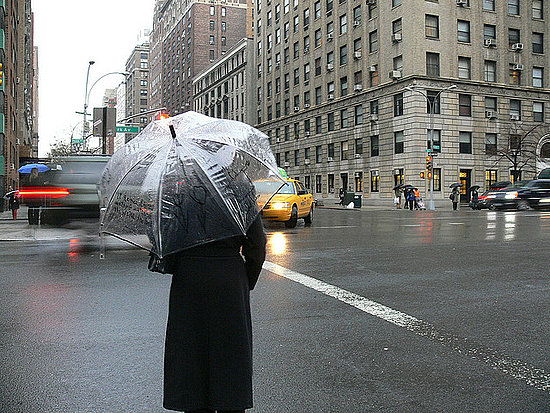
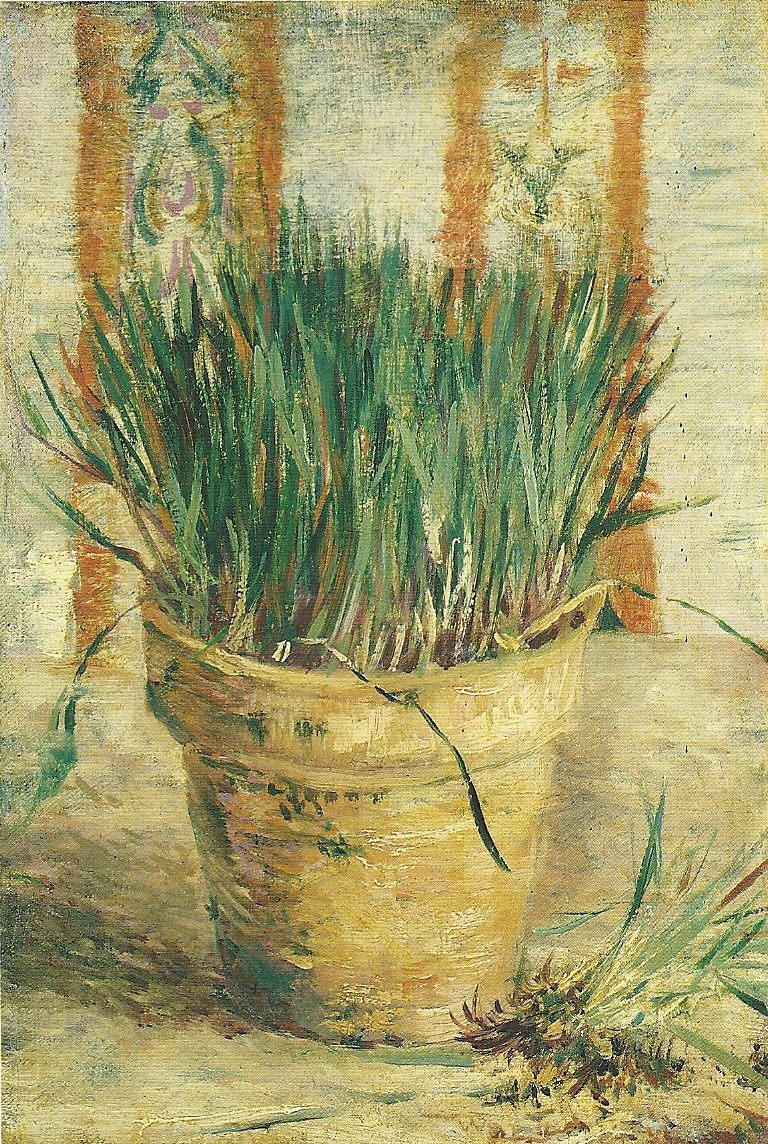
Things to look at on a rainy Sunday


1. My review of the Booker Prize winning Offshore by Penelope Fitzgerald.

2. My Sunday Painting.

3. My post on neglected literary classics. I want to hear what you think. And I did a random draw and Claire from Paperback Reader won my extra copy of As for Me and My House by Sinclair Ross. Maybe I should send it with delivery confirmation since she only has three months from reciept of the book to read it and write a review…that was the deal Claire, no backing down. (Oh, and can you email me your address?)

4. My latest intallment of Seen on the Subway.

Book Review: Offshore by Penelope Fitzgerald


I think these may be the wrong kind of
boats, but the picture conveys the
feel of the setting better than
the pretty edition I own

Penelope Fitzgerald fills the 141 pages of Offshore with an odd assortment of Londoners living on boats moored on the Battersea Reach of the Thames during the swingin’ sixties. It is not so much that each of the boat dwellers is odd, but taken as a whole they make for an odd assortment. And in a way, even the most conventional among them seem a little eccentric based solely on the fact that they have chosen to live on the Thames despite the practical and emotional complications imposed by doing so. For some, living offshore makes them quirky, for others being quirky makes them want to live offshore.

Richard kind of steals the show for me. In some ways he is the archetype former military character that pops up so frequently in British popular culture. Doesn’t there always seem to be a fussy colonel or major tucked away somewhere in so many books?  And it is no surprise that the control freak in the book is the one that appeals to me. Sure I was touched by single(ish) mom Nenna and amused by her lively, resourceful daughters Martha and Tilda. And yes, Maurice the rent boy was as amusing as he was tragic (although I unfortunately kept picturing John Inman from “Are You Being Served”). Compared to the others, Richard’s demons and desires seem much less dramatic, but set against his own reality they are no less consequential. Here Fitzgerald introduces us to Richard:

All the meetings of the boat-owners, by a movement as natural as the tides themselves, took place on Richard’s converted Ton class minesweeper. Lord Jim, a felt reproof to amateurs, in speckless, always-renewed gray paint, overshadowed the other craft and was nearly twice their tonnage, Just as Richard, in his decent dark blue blazer, dominated the meeting itself. And yet he by no means wanted this responsibility. Living on Battersea Reach, overlooked by some very good houses, and under the surveillance of the Port of London Authority, entailed, surely, a certain standard of conduct. Richard would be one of the last men on earth or water to want to impose it. Yet someone must. Duty is what no-one else will do at the moment. Fortunately he did not have to define duty. War service in the RNVR, and his whole temperament before and since, had done that for him.

And from time to time Richard’s inability to cope with anything but the most straightforward and linear makes him seem a little vulnerable. There are repeated, rather humorous references to his need to block out anything extraneous to his line of thought at any given moment.

On the whole, he disliked comparisons, because they made you think about more than one thing at a time.

Offshore is by no means Richard’s story. Nenna is really the focus of the book. And the other characters are more than just bit players. Fitzgerald packs a lot into a short book. Compared to other Fitzgeralds I have read, I think Offshore is less introspective and more accessible than The Bookshop but defintely more emotionally sophisticated than Human Voices. Not surprising that this is the one that won her the Booker Prize.

Seen on the Subway


Under the Volcano by Malcolm Lowry
The Reader: Early thirties guy with a shaved head who looked like he should be on the tube in London. He had on a very nice herringbone coat, and one of those gigantic tie knots that are much more prevalent in the UK then they are here. He also was wearing a wedding ring on one hand and a thumb ring on the other. And, he wore his watch on right wrist rather than his left. Does this mean he is a lefty?

The Book: A classic novel that is on the Modern Library’s Top 100 List. From the B&N synopsis: “On a single, fateful day in Quauhnahuac, Mexico, 1938, a former British consul wrestles with his demons as his wife tries to rescue their marriage from his drinking problem.”

The Verdict: Since I am making my way through that top 100 list I will definitely get to this one sooner or later.

Never Let Me Go by Kazuo Ishiguro
The Reader: Twenty-something woman with a camel colored 3/4 length trench coat and a thermal mug of coffee which she drank from illegally. The Metro system here in DC is one of the cleanest in world because it is against the law to consume food or beverages anywhere in the system. Of course the law is not always obeyed but they occasionally hand out tickets for those who break the rules so people tend to abstain. You can carry the beverage or food, you just aren’t suppose to consume it until you leave the station.

The Book: What can I say about this one that doesn’t give too much away? Written by the author of The Remains of the Day.

The Verdict: I read and enjoyed this book. I look forward to seeing the film.

Kabul Beauty School by Deborah Rodriquez
The Reader: When I first saw this woman she wasn’t even reading anything, but she looked like Claire from Paperback Reader. And she had the tell tale signs of a reader like a Barnes and Noble tote bag. I must admit I followed her on the platform at Gallery Place to make sure we got on the same train car. It paid off when she pulled out a book (and even had a bookmark from a public library that read “Live, Read, Love”). And after all the effort to see what she was reading I had to include it here even though it is nonfiction.

The Book: The subtitle fills in what the title leaves out and makes it pretty self-explanatory: “An American Woman Goes Behind the Veil.”

The Verdict: Seems kind of fascinating but not enough to make me pick it up.