Book Giveaway Winners

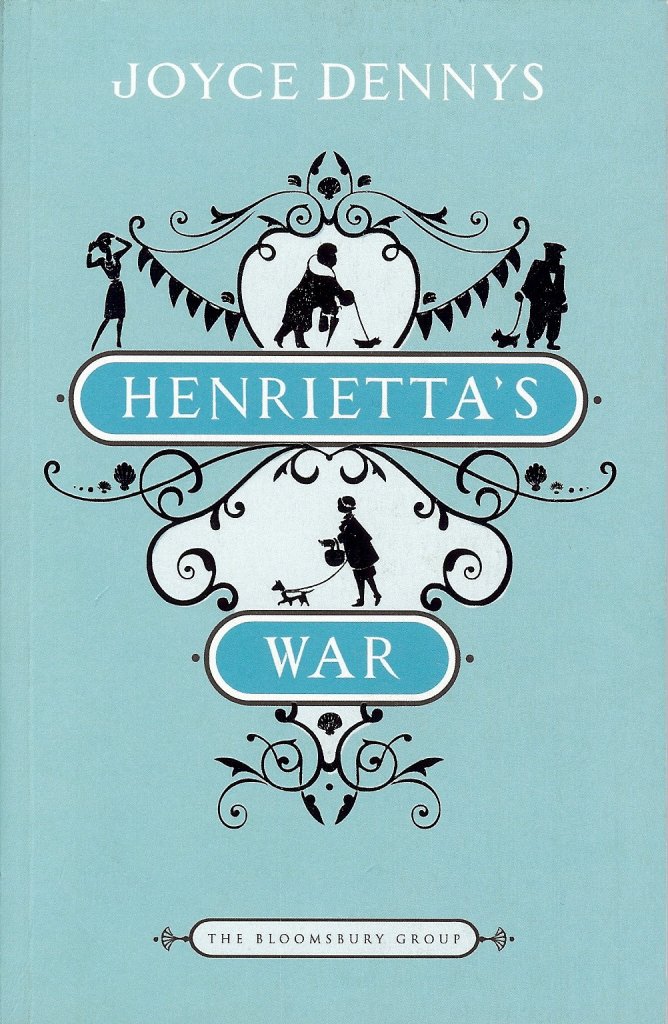
Due to a scheduling error on my part I closed down my book giveaway a day early and chose the winners tonight. Yes, winners is plural. I decided to give away two copies instead of one.

The winners of Henrietta’s War by Joyce Dennys, chosen randomly by the hubby are:

Kim at Books Sliced and Diced

and

Melanie at The Indextrious Reader

Congratulations to both of them. (Winners, if you haven’t already, shoot me an email (address can be found on my profile page) and let me know where you would like the book sent.)

Thanks to all who entered. Stay tuned for more give aways in the future. And please, feel free to tell me what you are thinking by posting a comment when you visit MyPorch.

Of Road Trips and May Sarton

In the summer of 2008 my husband and I took a wonderful road trip up through the Northeast. Normally our travels mean we get on a plane and go explore some other part of the US or the world. And while the Northeast feels decidedly different than DC and the mid-Atlantic region, it is close enough that we were able to skip the flight and car rental formula in favor of packing up our car and hitting the open road. Having our own vehicle and not being beholden to any schedule or airline luggage restrictions meant we really did have the freedom to do what we pleased. For me this meant stopping in every secondhand bookstore we came across. After two weeks traveling through the Finger Lakes, Adirondacks, and Hudson River Valley in upstate New York, the beautiful Berkshires in western Massachusetts, rural Vermont, New Hampshire, and Connecticut, and a final stop in Bucks County, Pennsylvania we arrived back in DC with about 75 more books than when we left.

During our overnight stay in Woodstock, Vermont we came across one of the nicest little bookshops on the whole trip. Pleasant Street Books is in a converted barn behind one of the houses that line the main street through town. It was a great place to spend a rainy afternoon. It had a really nice balance between antiquarian books and good secondhand reading copies and had a friendly, helpful proprietor behind the desk. While we were there I came across a stack of books by May Sarton. I knew the name, and had a vague notion that she was someone I should read, but I didn’t know anything about her. I am not sure why I was initially drawn to these old Norton paperbacks stacked on the floor in front of the shelves. When I started to look through them I noticed they had all been owned by the same person and was intrigued by the notion that whoever Susie was, she liked Sarton well enough to own eight of her books. The descriptions on the back of the books indicated that Sarton had been a bit of a local, having lived for many years in neighboring New Hampshire. It seemed fitting that our Northeast road trip should be commemorated with the purchase of some native literature.

Back in June, Art Durkee over at Dragoncave posted a lovely entry about his pilgrimage to Nelson, New Hampshire to see Sarton’s grave. He has some very striking pictures of Sarton’s milieu that so nourished her over the years.

Among the pile of Sarton were some of her novels and a few of her published journals. I started off by reading The Small Room a novel from 1961 about an academic and administrative crisis at a New England girls college. The second one I read was Kinds of Love, a novel about a long married couple, their friends and family and their relationships in a small New England town. I liked both books quite a bit, although I think The Small Room appealed to me more. It has been about a year since I read them, but I remember them having a kind of cozy but somewhat austere New England setting where nature and the seasons, and small town life are as important as any of characters in defining the books. Later I moved on to a few of her journals beginning with Journal of Solitude and The House by the Sea. I liked those two immensely but will talk about them in context of my most recent Sarton read.

May Sarton was born in 1912 in Belgium but was raised in the United States where she died of breast cancer in 1995 at age 83. Based on her tombstone, Sarton considered herself, above all, a poet. Indeed she published sixteen volumes of poetry but she also published eleven works of autobiographical non-fiction and journals, nineteen novels, and two children’s books.

Plant Dreaming Deep by May Sarton
It is unlike me to read things out of order, but so far I have been skipping around a bit among her autobiographical non-fiction. At first I could put it down to not owning all the necessary volumes to read them in order, but that doesn’t explain why I picked up Plant Dreaming Deep last week, instead of her first autobiographical volume. I can blame that on Wilkie Collins. After reading his fantastic novel The Woman in White, I needed something that was the exact opposite in style and content. Something based more firmly in real life. I needed to sweep up and clear away all of the Victorian drama and intrigue that was littering my psyche. I immediately thought of Sarton as the right tool for the job, and I skipped over her first volume of memoir because its detail was too much about dates and places and events. After so much plot, I wanted something that was pure description.

Plant Dreaming Deep was the perfect solution. It describes Sarton’s first home purchase in 1958 at the age of 46, her process of turning the house and 36 acres into her sanctuary, and her daily life and the people who became her neighbors and friends. This is the volume that begins to tell the tale of Sarton’s life in Nelson, New Hampsire and it was wonderful. This is essentially a poet writing about domestic chores and the joy and pain involved in her daily life. Like two other of her journals that I have read, Journal of Solitude and The House by the Sea, Plant Dreaming Deep is a throwback to a time when the hum of an electric typewriter was considered noisy. She had books, and wood fires, and her garden, and a mailbox full of letters and cards, and friends who came to visit her, and all kinds of other things that makes me want to live in the past. But she also had to deal with drought, black flies, and woodchucks. And among the peace and quiet, as we learn in later journal volumes, she also suffered from debilitating bouts of depression.

With black and white photos sprinkled here and there, Sarton’s journals are perfect for people who love writing, reading, and gardening, or anyone who fantasizes about living a quiet life in a beautiful setting.

Where would you like to transplant yourself, and what do you want to do when you get there?
Book Review: The Woman in White

The Woman in White
Wilkie Collins

Back in July I came across Savidge Reads, a great blog all about great books. Written by Simon Savidge, the blog has a section that Savidge refers to as his Readers Table where he lists some of his favorite books. Among the titles listed there are some favorites of mine like Brideshead Revisited and On Chesil Beach but there are also lots of books I had never even heard of let alone read. The Woman in White by Wilkie Collins was one of the latter. In the ensuing weeks as I traveled around the blogosphere, I kept running across mentions of Collins and The Woman in White in particular. I began to feel like I might be missing out on something. So when I was online buying a book or two, I decided to add The Woman in White to the list.

When the 600+ page book showed up I thought “My, that will make a great door stop.” The thing was huge. When was I ever going to pick that baby up and read it? Somewhat to my surprise I picked it up last weekend. I had just finished two very slim volumes and for some reason six hundred pages of Wilkie Collins began whispering to me from my TBR pile. The introduction in my edition (Barnes & Noble Classics) and the two prefaces by Collins’ himself almost made me put the book back on the pile. Not that there was anything wrong with them, I just feel sometimes like prefatory remarks can suck the life out of the main event. So I skimmed and skipped forward to the actual text of the novel and within a page and a half I was hooked in a big, big way.

The Woman in White is pure plot, every page is a turner and every chapter is a cliffhanger. Not surprising then to find out that the book began life as a serial. Beginning in 1859, installments of The Woman in White appeared in Charles Dickens’ weekly publication All the Year Round in Britain and in the U.S. in Harper’s Weekly. The first installment ran in the same issue as the final installment of Dickens’ A Tale of Two Cities. (Dickens was a mentor of Collins and in 1860 Collins’ brother married Dickens’ daughter Kate.)

I have been accused from time to time of liking books without a whole lot of plot and that are very low on thrills and spills. In that regard The Woman in White is decidedly not a typical book for me. It is full of intrigue, mystery, and anxiety induced moments. A kind of whodunit, except often times the mystery at hand isn’t who done it, but what “it” is in the first place. On the other hand, the period detail and the inclusion of letters, journal entries and other English bits and bobs put the book right up my alley.

I won’t even attempt to give a synopsis of the plot which is fabulously and plausibly implausible. It is way too complicated and too convoluted to make much sense of it here. It has lots of little peaks along the way with one or two big climaxes before you actually get to the final resolution. One could argue that some of the earlier plot climaxes could have easily, and perhaps appropriately, ended the book a couple of hundred pages sooner. But given that it was in Collins’ self-interest to stretch the serial out as long as possible, it is easy to understand why the book is as long as it is. But the book is interesting enough that you want it to last for 600 pages anyway.

Suffice it to say that The Woman in White is an entirely satisfying book. It is the kind of book that is hard to put down. The one that makes calling in sick worth it.

For other takes on The Woman in White check out these other blog posts on The Zen LeafA Guy’s Moleskine Notebook, The Critical Cynic, A Reader’s Journal.

Note on the cover image shown above.
A few editions of The Woman in White, as well as other novels use this striking image. It is James McNeill Whistler’s “Symphony in White, No. 1: The White Girl” painted in 1862. I have been lucky to see this painting in person many, many times since it lives at the National Gallery of Art here in Washington which is only about three miles from my house. And at almost 84 inches (213 cm) it is taller than my 6’2” frame. Pretty impressive. (The painting, not my frame.)

Sticking Out Like a Sore Thumb

Earlier this week I apparently cut my thumb under my thumbnail. I think it may have been when I opened a can of soda. The tab on the top slipped between flesh and nail. I didn’t think anything of it because I am always nicking, scraping, and cutting my hands without knowing how, and in many cases without even noticing until a day or two later.

But this particular hidden cut is apparently a Leo and wanted lots of attention. My thumb started to hurt two days ago but I continued to ignore it. Not one to be ignored, this attention-starved injury decided to up the ante by making my thumb all hot and throbby and even sending some radiating pain into other parts of my thumb. Well now the little bastard had my attention. Trying to operate a zipper with my right hand was like a little trip to Pain Central and the throbbing kept me awake last night. In less pain this morning but not wanting to end up spending time in the emgergency room this weekend if things took a turn for the worse, I went to my GP to see what could be done. Some spray-can freezing solution, a little scalpel action, a moderate amount of oozing (which I won’t describe in more detail), and  one prescription for a Dicloxacillin later, I feel like I can face the weekend without the fear of amputation or flesh-eating viruses.

The biggest annoyance at this point, other than having my dominant right thumb working at less than full capacity, is the fact that the Dicloxacillin not only has to be taken four times a day, but I have to take it on an empty stomach. So I am going to have to create an eating and medication schedule for the next 10 days. I guess the silver lining is that I love a good organization project…maybe I will do a spreadsheet…

Ulf Puder

One of the disappointing aspects of our very short stay in Freiburg was that most things were closed while we were there. There were lots of galleries and antique shops that looked wonderful, but were closed because it was Sunday. It certainly kept us from spending much money. But it also kept us from seeing some interesting looking art exhibits. One was for an artist named Ulf Puder. The name alone is interesting. But his paintings were cool as well. I like paintings with architectural or urban references.

Book Review: Margaret Atwood Can Do No Wrong

Murder in the Dark
Margaret Atwood
I know I am prone to hyperbole, but sheesh, Margaret Atwood really knows how to write. I am always a little stunned to enounter avid readers who are lukewarm, or even dare I say, cold, to Atwood’s genius. Her fiction is always interesting, sometimes disturbing, and in many cases substantively challenging, but it is all written in beautiful, clear language that is a pleasure in itself. Over at Savidge Reads Simon’s Gran got it exactly right when she said that Atwood “isn’t one to be missed, even when I don’t like her”.

Thanks to some ordering stupidity on my part, I won’t be getting Atwood’s newest novel The Year of the Flood until the end of October. So I have had to make do with Murder in the Dark, a slim volume of “short fictions and prose poems”. One of my favorites was a piece called “Women’s Novels” which isn’t much more than a numbered list of observations, but it encapsulates all of Atwood’s insight, humor, and clever writing. A few of my favorite bits:

Men’s novels are about men. Women’s novels are about men too but from a different point of view. You can have a men’s novel with no women in it except possibly the landlady or the horse, but you can’t have a women’s novel with no men in it. Sometimes men put women in men’s novels but they leave out some of the parts: the heads, for instance, or the hands. Women’s novels leave out parts of the men as well. Sometimes it’s the stretch between the belly button and the knees, sometimes it’s the sense of humour. It’s hard to have a sense of humour in a cloak, in high wind, on a moor.

 and

I like to read novels in which the heroine has a costume rustling discreetly over her breasts, or discreet breasts rustling under her costume; in any case there must be a costume, some breasts, some rustling, and, over all, discretion. Discretion over all, like a fog, a miasma through which the outlines of things appear only vaguely. A glimpse of pink through the gloom, the sound of breathing, satin slithering to the floor, revealing what? Never mind, I say. Never never mind.

Another piece called “Happy Endings” is a kind of “choose your own adventure” tale about relationships. After offering six different endings to follow the phrase “John and Mary meet” Atwood ultimately concludes:

You’ll have to face it, the endings are the same however you slice it. Don’t be deluded by any other endings, they’re all fake, either deliberately fake, with malicious intent to deceive, or just motivated by excessive optimism if not by downright sentimentality. The only authentic ending is the one provided here: John and Mary die. John and Mary die. John and Mary die.

On bread: “The bread they offered you is subversive, it’s treacherous, it does not mean life.” Subversive bread. Fabulous.

On writing:

The page waits, pretending to be blank. Is that its appeal, its blankness? What else is this smooth and white, this terrifyingly innocent? A snow fall, a glacier? It’s a desert, totally arid, without life. But people venture into such places. Why? To see how much they can endure, how much dry light?

and

The question about the page is: what is beneath it? It seems to have only two dimensions, you can pick it up and turn it over and the back is the same as the front. Nothing, you say, disappointed. But you were looking in the wrong place, you were looking on the back instead of beneath. Beneath the page is another story.

I could continue to quote, but perhaps, for the sake of copyright laws, I should encourage you get a copy of Murder in the Dark and read it for yourself.

Sunday Morning at the Farmers Market

Now that the hot summer weather has abated and soup season approaches, my thoughts turn to the Dupont Circle Farmers Market. With delcious fruit and veg from neighboring Maryland and Virginia and nearby Pennsylvania and West Virginia all year long, you might ask why I would avoid the market during the height of the summer. Easy, I hate the heat. You add that to the pushy, Type A yuppies that DC is full of and it is a recipe for me being extremely unhappy. I wish I had a less lame excuse, but there it is.
So this morning I got my butt out there and came home laden with fresh veggies. Now the trick is to acutally use them instead of letting them rot away. Sometimes easier said than done.

Book Review: George Eliot Makes it Up

Amos Barton
George Eiliot

I have had this lovely Hesperus edition of Amos Barton, George Eliot’s very first attempt at fiction, for a couple of years now. After reading my first Eliot earlier this summer (The Mill on the Floss), I turned to this little tome with renewed interest. This one is all about curates, money, housekeeping, and village gossip. The storyline is engaging enough (your basic poor curate and his family suffer the slings and arrows of gossip and hardship, suffer a loss, and ultimately resign themselves to the outcome) and the world that Eliot creates is interesting to live in for 94 pages. In our overstimulated lives it is hard to imagine living such a staid existence. In particular I loved this description of dinner party conversation that Eliot was no doubt mocking but which must have been all too common during her life:

Mr. Bridmain studied conversation as an art. To ladies he spoke of the weather, and was accustomed to consider it under three points of view: as a question of climate in general, comparing England with other countries in this respect; as a personal question, enquiring how it affected his lady interloctutor in particular; and as a question of probabilities, discussing whether there would be a change or a continuance of the present atmospheric conditions.

I don’t know how the ladies could stand all the excitement.

There’s a Hullabaloo about the Womenfolk

Ned Nickerson emailed me recently that he had put up some great footage of The Womenfolk on YouTube. This fabulous clip from Hulllabaloo from April 1965 has the ladies singing a wonderful snippet from “I’ll Never Find Another You”  They come in at about the 1:41 minute mark, and in my humble opinion, they are the best of the bunch.

For those of you who don’t know about The Womenfolk, you should check out my tribute to them and some of my other posts about these five fabulous folk singers.

Book Giveaway

UPDATE:  When I set the date for this drawing I forgot about some other commitments that would make it hard for me to get the book to the winner in a timely manner. So, I am closing the drawing immediately and choosing the winner tonight.. However, I have decided to give away two copies instead of only one!


When I purchased this book directly from the publisher I ordered two for some reason. Since I can’t remember who I was going to give the extra copy to, I am going to give it away here on MyPorch. And since the book is impossible to find in North America, I am going to limit participation to North America. (Although anyone else with a compelling argument as to why they should have it will be included in the drawing.) Simply leave a comment or send me an email by 30 September 2009.

I wrote about Henrietta’s War earlier today. See below.